Can your kitchen cabinets be restored after a sink leak in Lago Mar?
A leaking kitchen sink in Lago Mar can cause more damage than you might expect. Water seeps into cabinet bases, swelling particleboard, delaminating veneers, and creating the perfect environment for mold growth. The humid coastal climate of Virginia Beach means moisture lingers longer, accelerating wood rot and structural weakening. Before you decide to tear out your cabinets, it’s important to understand what’s actually happening inside those cabinet boxes and whether restoration is even possible. Repairing Water Damage at Your Virginia Beach Oceanfront Property After a Storm.
The first step is determining the extent of the damage. Solid wood cabinets can often be dried, sanded, and refinished if the water exposure was limited to a few hours. Particleboard and MDF cabinets, however, behave differently. These engineered materials absorb water like a sponge, expanding and losing structural integrity. Once particleboard reaches a certain saturation point, the fibers separate permanently. This is what restoration professionals call “blown out” material, and it cannot be saved. EPA Mold Guidelines.
Another critical factor is the age and construction quality of your cabinets. Older cabinets built with plywood boxes and solid wood faces have a much higher restoration success rate than modern budget cabinets made with thin laminates over particleboard. The thickness of the material, the type of adhesive used, and even the cabinet’s location relative to the leak source all affect the outcome.
Time matters significantly. Water sitting in a cabinet base for more than 24-48 hours creates conditions for mold to establish. The EPA recommends addressing water damage within 24-48 hours to prevent mold growth. In Lago Mar’s humid environment, this window shrinks even further because the moisture doesn’t evaporate as quickly as it would in drier climates. Who to Call for Emergency Water Removal in Virginia Beach Right Now.
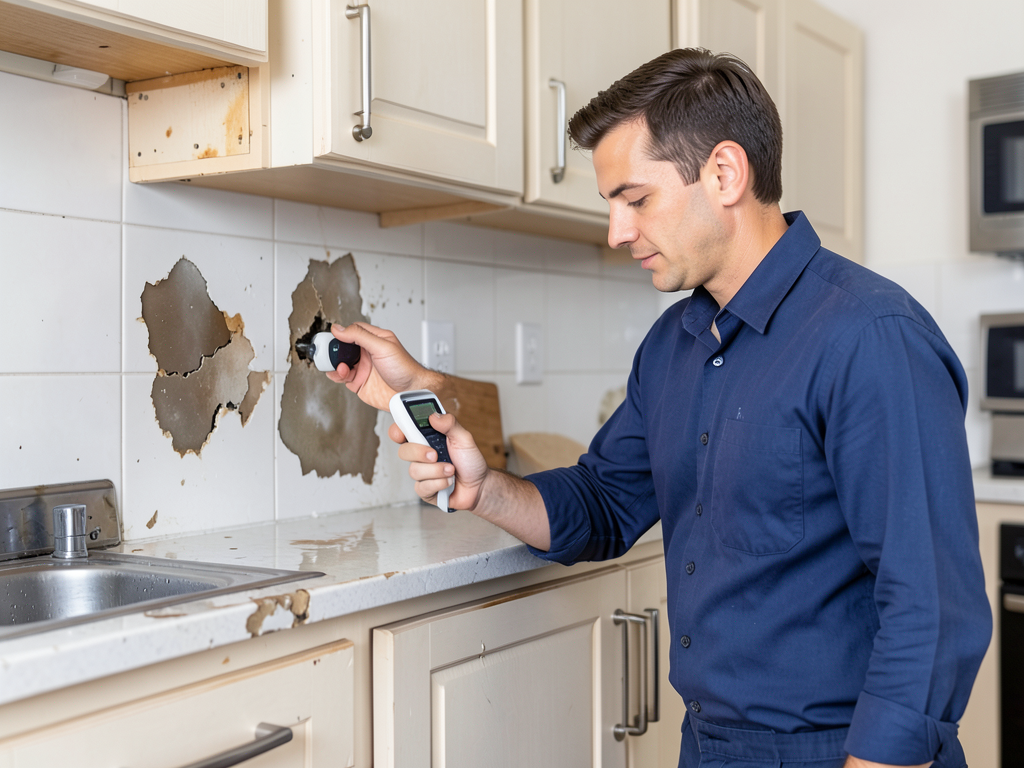
Professional restoration technicians use moisture meters to measure the actual water content in cabinet materials. Readings above 15-20% indicate significant saturation that requires specialized drying equipment. Standard household fans cannot remove moisture from within the wood fibers effectively. Industrial-grade dehumidifiers and air movers are necessary to draw out moisture from deep within the cabinet structure.
The restoration process itself involves several stages. First, all standing water must be extracted using wet vacuums and mops. Then, the area is dried using high-volume air movers placed strategically to create airflow across all surfaces. Dehumidifiers run continuously to remove moisture from the air, preventing reabsorption by the wood. This process typically takes 24-72 hours depending on the extent of saturation and the specific materials involved.
Once dry, the structural integrity must be assessed. Technicians check for warping, delamination, and joint separation. Delamination occurs when the thin veneer layer separates from the substrate, creating bubbles or peeling. This can sometimes be repaired by injecting wood glue under the veneer and clamping it until the adhesive sets. However, if the underlying particleboard has swollen beyond its original dimensions, the veneer cannot be reattached properly.
Surface preparation comes next. Sanding removes raised grain and smooths the surface for refinishing. Wood filler addresses minor dings and scratches. For cabinets with water stains, bleaching agents may be necessary to even out the color before applying new finish. The final step involves matching the existing cabinet color and sheen, which requires skill and the right materials to achieve a seamless repair.
Mold prevention is crucial in Virginia Beach’s humid climate. Even after visible drying, microscopic mold spores can remain dormant in wood pores. Professional restoration includes antimicrobial treatments that penetrate the wood and create a barrier against future mold growth. This is especially important for cabinets near food preparation areas where health concerns are paramount. What Virginia Beach Town Center Condo Owners Should Do After a Leak.
Insurance coverage for cabinet restoration varies significantly. Some policies cover water damage restoration but not the full replacement cost. Others may require you to pay the difference between restoration and new cabinet installation. Documenting the damage thoroughly with photos and moisture readings helps support your insurance claim. Many restoration companies work directly with insurance adjusters to streamline this process.
The decision between restoration and replacement often comes down to cost-benefit analysis. Restoration typically costs 40-60% of replacement, but this depends on the extent of damage and the cabinet materials. If more than 50% of the cabinet structure is compromised, replacement often makes more financial sense. However, if your cabinets are custom-built or have unique features that would be expensive to replicate, restoration becomes more attractive despite the damage.
Coastal Virginia’s high humidity creates unique challenges for cabinet restoration. The same moisture that causes the initial damage can prevent proper drying if not addressed quickly. Salt air can also accelerate corrosion of hardware and weaken adhesives over time. Professional restoration in this region requires understanding these local factors and adjusting techniques accordingly.
Homeowners in Lago Mar should also consider the age of their plumbing system. Many homes in this area were built in the 1980s and 1990s with polybutylene piping, which is prone to sudden failure. A cabinet restoration won’t prevent future leaks if the underlying plumbing issue isn’t addressed. A comprehensive approach includes both the immediate restoration and evaluation of the plumbing system to prevent recurrence. Immediate Steps for a Burst Pipe Repair in the Hilltop Neighborhood.
The restoration timeline varies based on damage severity. Minor water exposure might require only 2-3 days of drying and surface refinishing. Extensive damage with structural issues could take 1-2 weeks when accounting for drying time, repairs, and finishing work. During this period, the kitchen remains partially functional, though access to affected cabinets is restricted.
Professional restoration offers advantages beyond just saving money. It preserves the existing kitchen layout and countertop alignment, which can be disrupted during cabinet replacement. It also reduces construction waste going to landfills, making it a more environmentally responsible choice. For historic homes in Virginia Beach, restoration maintains the original character and craftsmanship that replacement cannot replicate.
Call (757) 909-5033 today to schedule your inspection. Our technicians can assess your specific situation and provide a clear recommendation based on the actual condition of your cabinets and the extent of water damage. Don’t let a sink leak turn into a complete kitchen renovation when restoration might be the better option.
Assessment: Is Your Kitchen Cabinet Salvageable?
Determining whether your cabinets can be saved requires a systematic evaluation. The first test involves the “screwdriver test” – gently pressing a screwdriver tip into the cabinet base. If it sinks easily, the particleboard has lost structural integrity and cannot be restored. Solid wood will resist penetration, indicating the material can likely be saved.
Visual inspection reveals important clues. Bubbling or peeling veneer indicates delamination, which may be repairable if the substrate is still sound. Warping or bowing of cabinet faces suggests significant moisture exposure that may have compromised structural stability. Dark water stains penetrating deep into the wood grain often mean the damage extends beyond surface level.
The location of the leak matters significantly. Water from a clean source pipe is less problematic than water from a drain line, which may contain contaminants that accelerate deterioration and create health hazards. The duration of exposure is equally critical – cabinets exposed to water for less than 24 hours have a much higher restoration success rate than those soaked for days.
Material composition determines restoration potential. Plywood cabinets with hardwood faces can often be restored even with moderate water damage. MDF and particleboard cabinets have lower success rates because these materials absorb water and lose structural integrity more quickly. The thickness of the material also matters – thicker panels resist warping better than thin ones.
Age affects restoration feasibility. Cabinets less than 10 years old typically use adhesives and finishes that respond better to modern restoration techniques. Older cabinets may have finishes that are incompatible with current restoration products, limiting repair options. However, older solid wood cabinets often have superior construction that makes them worth restoring despite their age.
Professional moisture meters provide objective data about water content. Readings above 20% indicate significant saturation requiring industrial drying equipment. Readings between 15-20% suggest the cabinets can be saved with proper drying and refinishing. Readings below 15% indicate minimal damage that may only require surface treatment.
Call (757) 909-5033 to have a professional assess your cabinets. We use moisture meters and visual inspection to determine restoration potential before any work begins.
Immediate Steps to Minimize Damage
When you discover a leaking sink, quick action can mean the difference between restoration and replacement. The first priority is stopping the water source. Turn off the shut-off valves under the sink if accessible. If the leak is from a supply line, this stops water immediately. If it’s from the drain, you’ll need to avoid using the sink until repairs are made.
Remove all items from affected cabinets to access the full extent of damage. Water often pools in the back corners or under items, creating hidden damage zones. Check for standing water in these areas and remove it promptly. Use towels to soak up visible water, but understand that this only addresses surface moisture.
Open cabinet doors and drawers to increase air circulation. This simple step can reduce drying time significantly by allowing moisture to escape rather than remaining trapped inside. If possible, point a fan toward the open cabinets to create airflow. However, household fans alone cannot remove moisture absorbed deep within the wood.
Document the damage thoroughly for insurance purposes. Take clear photos of all affected areas, including close-ups of water stains, warping, and any visible mold growth. Note the date and time of discovery, as this information helps establish the timeline for insurance claims and mold prevention requirements under EPA guidelines.
Avoid using heat sources like hair dryers or space heaters to speed drying. Rapid surface drying can trap moisture inside the wood, creating conditions for mold growth that you cannot see. Professional restoration uses controlled temperature and humidity to ensure moisture is removed evenly from all layers of the material.
Check adjacent areas for water migration. Water can travel along cabinet bases and into walls or flooring. Feel walls near the sink for dampness and check flooring for warping or discoloration. Addressing only the visible cabinet damage while ignoring water in walls or subfloors leads to recurring problems.
Call (757) 909-5033 immediately for professional assessment. Our emergency response team can begin proper drying procedures within hours of your call, preventing further damage and increasing restoration success rates.
The Restoration Process: Step-by-Step
Professional cabinet restoration follows a systematic process that addresses both visible damage and hidden moisture. The first step involves complete water extraction using commercial-grade wet vacuums and absorbent materials. This removes standing water that household methods cannot reach effectively.
Industrial dehumidification begins immediately after extraction. Professional-grade dehumidifiers remove moisture from the air at rates of 20-30 gallons per day, compared to household units that remove only 1-2 gallons. This rapid moisture removal prevents reabsorption by the wood and creates conditions for proper drying.
Air movement is strategically positioned to create optimal airflow across all cabinet surfaces. Technicians place air movers at specific angles calculated to maximize evaporation without causing surface cracking. The typical setup includes 4-6 air movers for a standard kitchen, positioned to create a continuous airflow pattern.
Moisture monitoring continues throughout the drying process. Technicians use penetrating moisture meters to check water content at multiple depths within the cabinet material. Readings are taken daily to track progress and adjust equipment placement. The target moisture content for wood is typically 6-9%, depending on the specific species and local humidity conditions.
Structural repairs address any damage that occurred during the water exposure. This may include replacing delaminated veneers, reinforcing weakened joints, or installing new cabinet bases if the original particleboard has deteriorated beyond repair. Each repair is matched to the original construction methods and materials as closely as possible.
Surface preparation involves sanding to remove raised grain and smooth the surface for refinishing. Technicians use progressively finer grits of sandpaper, typically starting at 80-grit for damaged areas and finishing with 220-grit for a smooth surface ready for new finish. This process removes water stains and prepares the wood to accept new stain or paint.
Color matching and refinishing require skill and experience to achieve a seamless repair. Technicians must match not only the color but also the sheen and application method of the original finish. This often involves mixing custom stain colors and applying multiple coats to achieve the exact match with surrounding cabinets.
Final inspection includes checking all repaired areas for proper adhesion, color match, and structural integrity. Technicians verify that all hardware functions correctly and that doors and drawers operate smoothly. The area is cleaned thoroughly, removing all dust and debris from the restoration process.
Call (757) 909-5033 to begin your cabinet restoration. Our process addresses both immediate damage and long-term durability, ensuring your cabinets look and function like new.
Mold Prevention and Sanitization
Mold growth represents the most serious risk following water damage to kitchen cabinets. The dark, warm environment inside cabinets provides ideal conditions for mold spores to germinate and multiply rapidly. In Virginia Beach’s humid climate, mold can establish within 24-48 hours of water exposure, making rapid response critical.
Professional mold remediation follows IICRC S520 standards, which specify procedures for safely removing and preventing mold growth. The first step involves containing the affected area to prevent spore spread to other parts of the home. This includes using plastic sheeting and negative air pressure to isolate the work area. IICRC Standards.
Antimicrobial treatments are applied to all affected surfaces after drying is complete. These solutions penetrate wood pores and create a barrier against future mold growth. Professional-grade antimicrobials are more effective than household cleaners and remain active longer, providing extended protection against spore germination.
HEPA filtration removes airborne mold spores during the remediation process. Professional-grade air scrubbers with HEPA filters capture particles as small as 0.3 microns, effectively removing mold spores from the air. This prevents cross-contamination and ensures the air quality in your home returns to safe levels. Expert Mold Remediation for Vacation Rentals in Sandbridge.
Moisture content monitoring continues even after visible drying is complete. Mold can grow in wood with moisture content as low as 20%, so ensuring cabinets reach the proper dry state is essential for prevention. Technicians use moisture meters to verify that all materials have reached safe moisture levels before completing the restoration.
Ventilation improvements may be necessary in humid climates like Virginia Beach. Installing small vents in cabinet bases or using moisture-absorbing products can help prevent future moisture accumulation. These modifications address the underlying environmental conditions that contribute to mold growth.
Food safety considerations are paramount for kitchen cabinet restoration. All antimicrobial treatments used must be food-safe and approved for use in food preparation areas. Technicians take special care to ensure no harmful residues remain on surfaces that will contact food or food storage containers.
Call (757) 909-5033 for professional mold prevention. Our antimicrobial treatments and HEPA filtration ensure your restored cabinets remain mold-free in Virginia Beach’s challenging climate.
Estimated Costs and Insurance Claims
Understanding the cost factors for cabinet restoration helps you make informed decisions about repair versus replacement. Professional restoration typically costs between $500 and $2,500 for a standard kitchen, depending on the extent of damage and the number of cabinets affected. This represents significant savings compared to full cabinet replacement, which can cost $5,000 to $15,000 or more.
Material costs vary significantly based on cabinet construction. Solid wood cabinets require different restoration techniques and materials than particleboard or MDF cabinets. The age and finish of your cabinets also affect restoration costs, as matching older finishes or custom colors may require additional labor and specialized products.
Labor costs depend on the complexity of the restoration work required. Simple surface refinishing might take 2-3 days, while extensive structural repairs could require 1-2 weeks. The need for mold remediation or antimicrobial treatment adds to the overall cost but is essential for ensuring long-term success.
Insurance coverage for water damage varies by policy type and the specific cause of the leak. Most standard homeowners policies cover sudden and accidental water damage from plumbing failures. However, damage from gradual leaks or lack of maintenance may not be covered. Reviewing your policy details helps set realistic expectations for coverage.
Documentation requirements for insurance claims include photos of the damage, moisture readings, and detailed estimates for the restoration work. Professional restoration companies typically provide this documentation as part of their service, making the claims process smoother. Some companies work directly with insurance adjusters to streamline approval and payment.
Additional costs may arise from related repairs needed during the restoration process. This could include plumbing repairs to fix the leak source, drywall repair if water migrated to walls, or flooring repairs if water damaged the floor under the cabinets. A comprehensive assessment identifies all necessary repairs upfront.
Call (757) 909-5033 for a detailed cost estimate. We provide transparent pricing and work with your insurance company to maximize your coverage benefits.
Why Professional Restoration Matters in Virginia Beach
Virginia Beach’s coastal environment creates unique challenges for cabinet restoration that require professional expertise. The high humidity levels, averaging 75-85% year-round, mean moisture doesn’t evaporate as quickly as it would in drier climates. This extended drying time increases the risk of mold growth and can cause additional damage if not managed properly.
Salt air exposure accelerates corrosion of cabinet hardware and can weaken adhesives over time. Professional restoration includes treating hardware with corrosion-resistant products and using adhesives specifically formulated to withstand coastal conditions. These steps extend the life of your restored cabinets in the challenging Virginia Beach environment.
Local building codes in Virginia Beach require specific procedures for water damage restoration, particularly in food preparation areas. The Virginia Uniform Statewide Building Code includes requirements for mold remediation and moisture control that professional restoration companies follow. Compliance with these codes ensures your restoration meets all legal requirements.
The frequency of severe weather events in coastal Virginia increases the likelihood of water damage from various sources. Hurricanes, tropical storms, and nor’easters can cause flooding that affects kitchen cabinets. Professional restoration companies understand these regional risks and build appropriate protections into their restoration work.
Local knowledge of common cabinet construction methods used in Virginia Beach homes proves valuable during restoration. Many homes in the area were built during specific periods using particular materials and construction techniques. Understanding these local building patterns helps technicians choose the most effective restoration approaches.
Professional equipment designed for coastal humidity provides better results than standard restoration tools. Industrial dehumidifiers with higher capacity, specialized air movers, and moisture meters calibrated for local conditions all contribute to more effective restoration in Virginia Beach’s challenging environment.
Call (757) 909-5033 to work with local experts who understand Virginia Beach’s unique restoration challenges. Our experience with coastal humidity and building codes ensures your cabinets are restored properly the first time.
Frequently Asked Questions
How long does cabinet restoration take after a sink leak?
The restoration timeline varies based on damage extent. Minor water exposure typically requires 2-3 days for drying and refinishing. Extensive damage with structural issues may take 1-2 weeks when accounting for drying time, repairs, and finishing work. Professional moisture monitoring ensures cabinets are completely dry before refinishing begins.
Can mold grow in cabinets even after they appear dry?
Yes, mold can grow in cabinets with moisture content above 20%, even if surfaces appear dry. Professional restoration includes moisture testing at multiple depths and antimicrobial treatments that prevent mold growth in hidden areas. This is especially important in Virginia Beach’s humid climate where moisture lingers longer.
Will insurance cover cabinet restoration after a sink leak?
Most standard homeowners policies cover sudden and accidental water damage from plumbing failures. Coverage depends on your specific policy terms and the cause of the leak. Professional restoration companies provide documentation for insurance claims and often work directly with adjusters to streamline the approval process.
How can I tell if my cabinets are beyond restoration?
Cabinets are typically beyond restoration if particleboard has swollen beyond its original dimensions, if structural integrity is compromised (easily penetrated by a screwdriver), or if mold has extensively colonized the material. Professional assessment using moisture meters and visual inspection provides definitive answers about restoration potential.
What’s the difference between DIY drying and professional restoration?
DIY drying uses household fans and dehumidifiers that cannot remove moisture from deep within cabinet materials effectively. Professional restoration uses industrial-grade equipment that removes moisture at rates 10-20 times faster than household units. Professionals also monitor moisture content scientifically and apply antimicrobial treatments to prevent mold growth.
You may also find this helpful. Why your Thoroughgood home needs a refrigerator water line inspection every year.
{
“@context”: “https://schema.org”,
“@type”: “BlogPosting”,
“headline”: “Can your kitchen cabinets be restored after a sink leak in Lago Mar?”,
“description”: “Discover if your Lago Mar kitchen cabinets can be saved after a sink leak. Learn about structural damage, mold risks, and restoration options specific to Virginia Beach humidity.”,
“wordCount”: 3440,
“datePublished”: “2026-03-14T07:49:00.000Z”,
“dateModified”: “2026-03-14T07:49:00.000Z”,
“inLanguage”: “en-US”,
“mainEntityOfPage”: {
“@type”: “WebPage”,
“@id”: “https://apexwaterdamagerestorationvirginiabeach.com”
},
“publisher”: {
“@type”: “LocalBusiness”,
“name”: “Apex Water Damage Restoration Virginia Beach”,
“url”: “https://apexwaterdamagerestorationvirginiabeach.com”
},
“author”: {
“@type”: “Organization”,
“name”: “Apex Water Damage Restoration Virginia Beach”,
“url”: “https://apexwaterdamagerestorationvirginiabeach.com”
},
“image”: {
“@type”: “ImageObject”,
“url”: “https://apexwaterdamagerestorationvirginiabeach.com/wp-content/uploads/2026/03/can-your-kitchen-cabinets-be-restored-after-a-sink-1.png”
}
}
{
“@context”: “https://schema.org”,
“@type”: “LocalBusiness”,
“name”: “Apex Water Damage Restoration Virginia Beach”,
“url”: “https://apexwaterdamagerestorationvirginiabeach.com”,
“address”: {
“@type”: “PostalAddress”,
“addressLocality”: “Virginia Beach”
},
“areaServed”: {
“@type”: “City”,
“name”: “Virginia Beach”
}
}
{
“@context”: “https://schema.org”,
“@type”: “FAQPage”,
“mainEntity”: [
{
“@type”: “Question”,
“name”: “Assessment: Is Your Kitchen Cabinet Salvageable?”,
“acceptedAnswer”: {
“@type”: “Answer”,
“text”: “Determining whether your cabinets can be saved requires a systematic evaluation. The first test involves the \”screwdriver test\” – gently pressing a screwdriver tip into the cabinet base. If it sinks easily, the particleboard has lost structural integrity and cannot be restored. Solid wood will resist penetration, indicating the material can likely be saved.”
}
},
{
“@type”: “Question”,
“name”: “How long does cabinet restoration take after a sink leak?”,
“acceptedAnswer”: {
“@type”: “Answer”,
“text”: “The restoration timeline varies based on damage extent. Minor water exposure typically requires 2-3 days for drying and refinishing. Extensive damage with structural issues may take 1-2 weeks when accounting for drying time, repairs, and finishing work. Professional moisture monitoring ensures cabinets are completely dry before refinishing begins.”
}
},
{
“@type”: “Question”,
“name”: “Can mold grow in cabinets even after they appear dry?”,
“acceptedAnswer”: {
“@type”: “Answer”,
“text”: “Yes, mold can grow in cabinets with moisture content above 20%, even if surfaces appear dry. Professional restoration includes moisture testing at multiple depths and antimicrobial treatments that prevent mold growth in hidden areas. This is especially important in Virginia Beach’s humid climate where moisture lingers longer.”
}
},
{
“@type”: “Question”,
“name”: “Will insurance cover cabinet restoration after a sink leak?”,
“acceptedAnswer”: {
“@type”: “Answer”,
“text”: “Most standard homeowners policies cover sudden and accidental water damage from plumbing failures. Coverage depends on your specific policy terms and the cause of the leak. Professional restoration companies provide documentation for insurance claims and often work directly with adjusters to streamline the approval process.”
}
},
{
“@type”: “Question”,
“name”: “How can I tell if my cabinets are beyond restoration?”,
“acceptedAnswer”: {
“@type”: “Answer”,
“text”: “Cabinets are typically beyond restoration if particleboard has swollen beyond its original dimensions, if structural integrity is compromised (easily penetrated by a screwdriver), or if mold has extensively colonized the material. Professional assessment using moisture meters and visual inspection provides definitive answers about restoration potential.”
}
},
{
“@type”: “Question”,
“name”: “What’s the difference between DIY drying and professional restoration?”,
“acceptedAnswer”: {
“@type”: “Answer”,
“text”: “DIY drying uses household fans and dehumidifiers that cannot remove moisture from deep within cabinet materials effectively. Professional restoration uses industrial-grade equipment that removes moisture at rates 10-20 times faster than household units. Professionals also monitor moisture content scientifically and apply antimicrobial treatments to prevent mold growth.”
}
}
]
}
{
“@context”: “https://schema.org”,
“@type”: “BreadcrumbList”,
“itemListElement”: [
{
“@type”: “ListItem”,
“position”: 1,
“name”: “Home”,
“item”: “https://apexwaterdamagerestorationvirginiabeach.com”
},
{
“@type”: “ListItem”,
“position”: 2,
“name”: “Blog”,
“item”: “https://apexwaterdamagerestorationvirginiabeach.com/blog”
},
{
“@type”: “ListItem”,
“position”: 3,
“name”: “Can your kitchen cabinets be restored after a sink leak in Lago Mar?”
}
]
}
{
“@context”: “https://schema.org”,
“@type”: “Service”,
“serviceType”: “Water Damage Restoration”,
“provider”: {
“@type”: “LocalBusiness”,
“name”: “Apex Water Damage Restoration Virginia Beach”,
“url”: “https://apexwaterdamagerestorationvirginiabeach.com”
},
“areaServed”: {
“@type”: “City”,
“name”: “Virginia Beach”
},
“description”: “Discover if your Lago Mar kitchen cabinets can be saved after a sink leak. Learn about structural damage, mold risks, and restoration options specific to Virginia Beach humidity.”
}