




Menu

Warehouse Flood Restoration in Virginia Beach – Industrial-Grade Recovery That Protects Your Operations and Inventory

When floodwater compromises your warehouse, you need rapid commercial flood remediation that minimizes downtime, prevents mold proliferation in high-humidity conditions, and gets your distribution operations back online without jeopardizing product safety or regulatory compliance.

Slider Image 1
Slider Image 2
Slider Image 3
Slider Image 4
Slider Image 5
Slider Image 7
Slider Image 8
Slider Image 9
Slider Image 10
Slider Image 11

Why Warehouse Flooding in Virginia Beach Demands Immediate Industrial Water Damage Cleanup

Virginia Beach warehouses face unique flood risks that compound damage severity. The city's proximity to the Atlantic Ocean and the Chesapeake Bay creates persistent humidity levels above 70 percent year-round, which accelerates mold growth within 24 to 48 hours of water intrusion. Add in the region's clay soil composition, which drains poorly and increases hydrostatic pressure against foundation walls, and you have a perfect storm for structural compromise.

Your warehouse likely sits in one of the low-lying industrial corridors near the Port of Virginia or along Military Highway, where storm surge from tropical systems and nor'easters regularly overwhelms drainage infrastructure. When floodwater breaches your facility, it carries contaminants from parking lots, loading docks, and adjacent properties. This contaminated water saturates concrete floors, infiltrates HVAC systems, and compromises stored goods.

The financial impact extends beyond inventory loss. Every hour your distribution center water removal is delayed translates to interrupted supply chains, missed shipments, and potential contract penalties. If you store temperature-sensitive products or materials subject to FDA or USDA oversight, water exposure creates compliance issues that threaten your operating permits.

Warehouse water mitigation requires industrial-grade equipment and coordinated logistics that residential restoration companies cannot provide. You need truck-mounted extractors capable of removing thousands of gallons per hour, commercial dehumidifiers sized for spaces exceeding 50,000 square feet, and containment strategies that allow partial operations to continue while remediation proceeds. The Virginia Beach market demands providers who understand both the physical challenges of coastal flooding and the operational realities of 24/7 distribution facilities.

Why Warehouse Flooding in Virginia Beach Demands Immediate Industrial Water Damage Cleanup
Our Commercial Flood Remediation Methodology for Virginia Beach Industrial Facilities

Our Commercial Flood Remediation Methodology for Virginia Beach Industrial Facilities

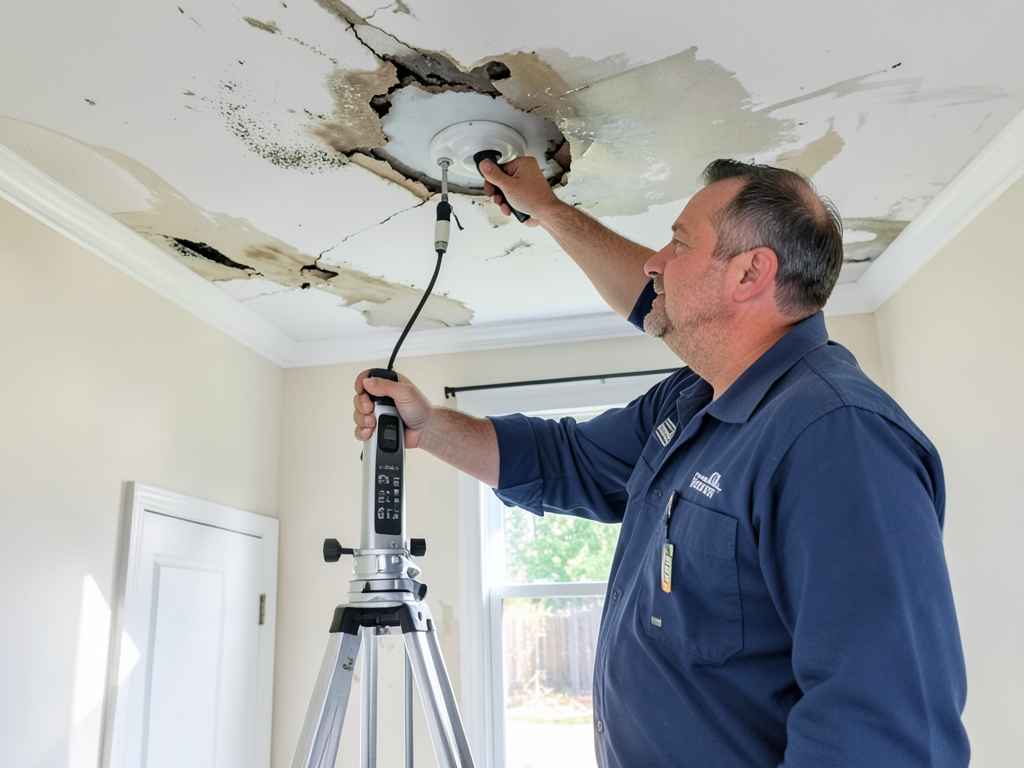
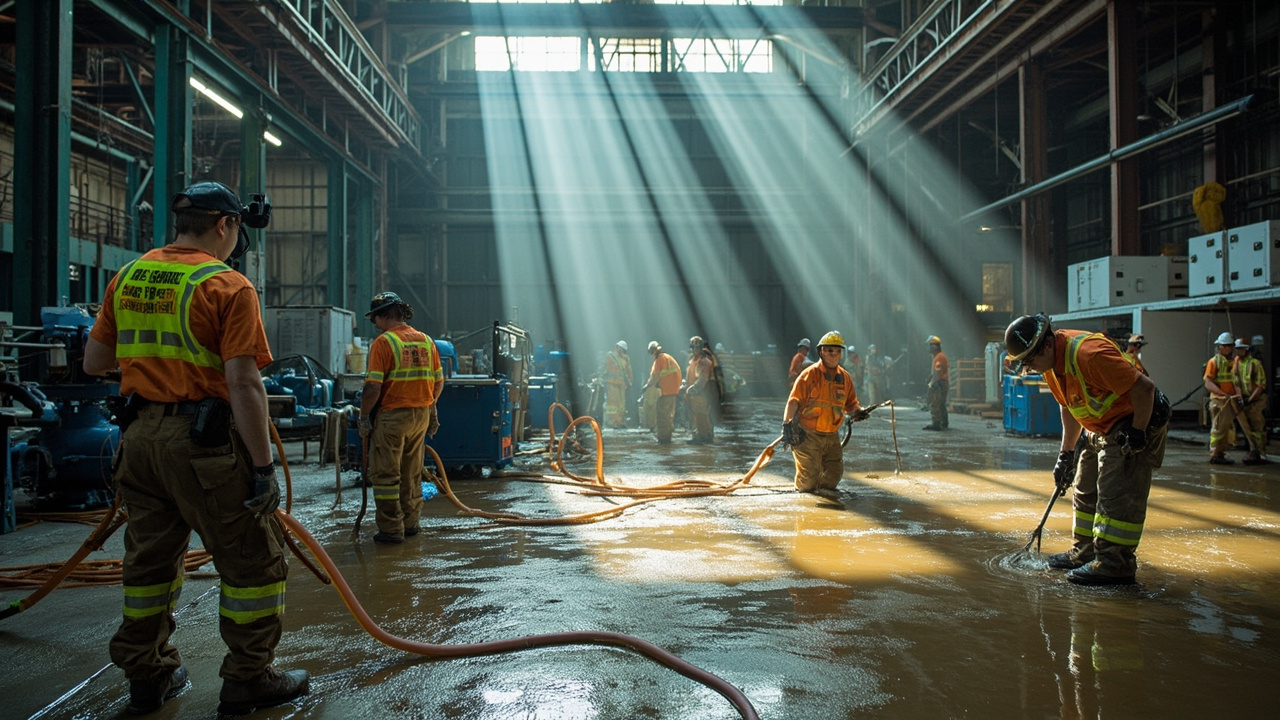
We deploy industrial flood recovery protocols designed specifically for high-bay warehouses and distribution centers. Our approach begins with comprehensive damage assessment using thermal imaging cameras and moisture meters calibrated for concrete slab construction, the standard foundation type in Virginia Beach industrial parks. We identify hidden moisture reservoirs in wall cavities, insulation layers, and beneath floor coatings that become breeding grounds for microbial growth.

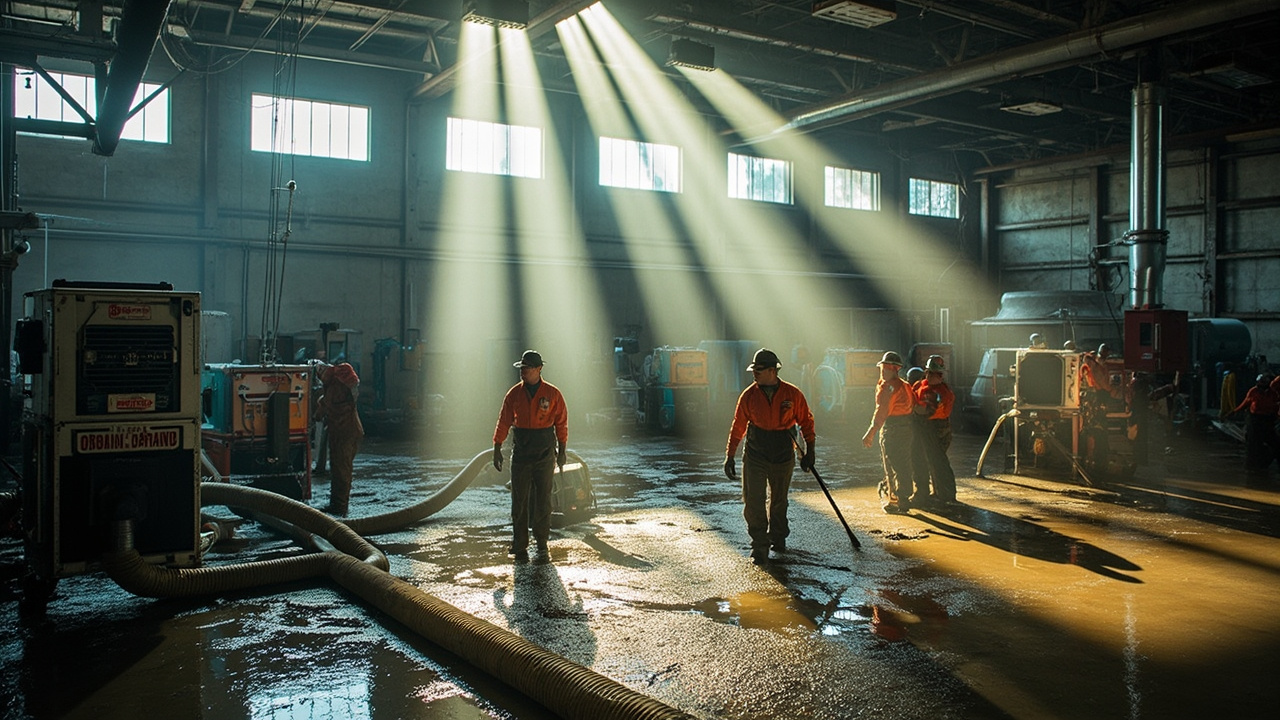
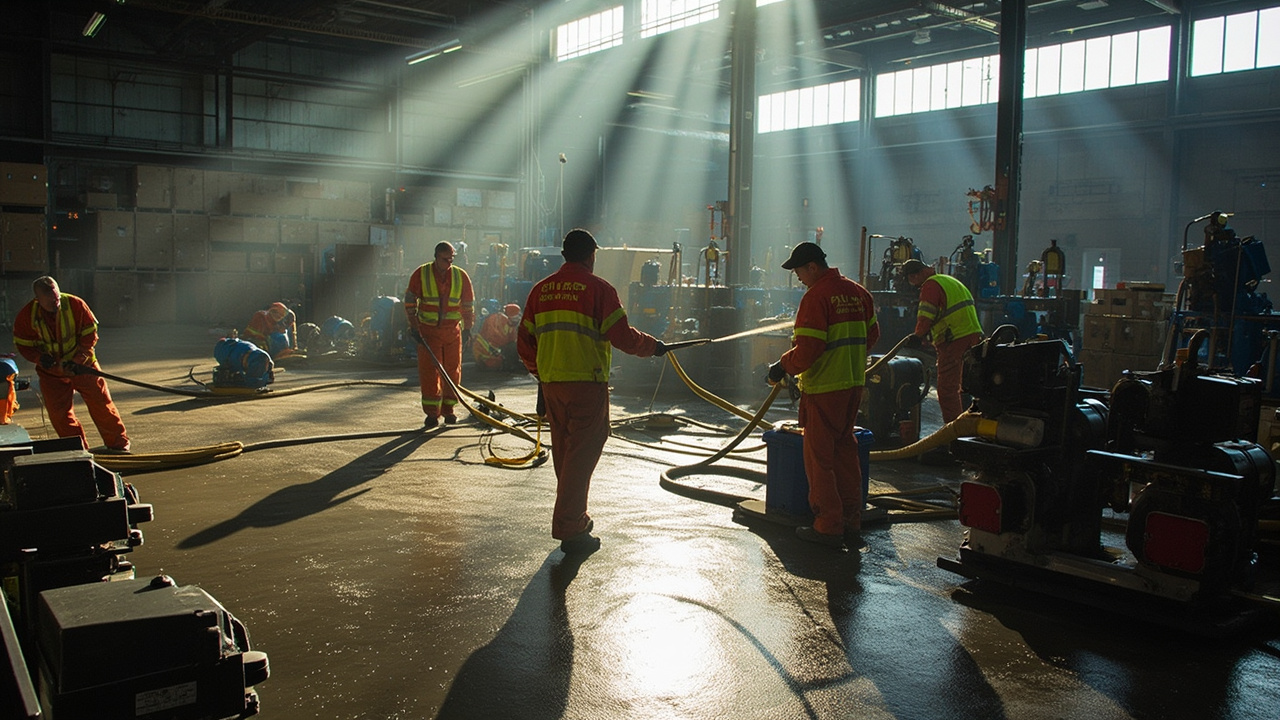
Our extraction phase utilizes truck-mounted water removal systems generating 400+ CFM of suction power, paired with submersible pumps rated for contaminated water. We establish drainage gradients using laser levels to direct water toward collection points, preventing re-saturation of dried areas. For facilities with racking systems, we employ containment barriers that isolate affected zones, allowing you to maintain operations in unaffected sections.

Dehumidification in Virginia Beach's humid climate requires precision. We calculate grain depression targets based on current outdoor conditions, typically aiming for 40 to 50 percent relative humidity to prevent secondary damage without over-drying materials. Our commercial-grade LGR dehumidifiers remove up to 200 pints per day per unit, with multiple units creating negative air pressure that pulls moisture from building materials into the drying envelope.

We pay particular attention to Virginia Beach building code requirements for commercial structures, especially ventilation standards outlined in the International Building Code as adopted by the city. Our remediation plans account for these regulations, ensuring your facility passes post-restoration inspections without modification delays. We document every phase with photo evidence and moisture readings, creating the comprehensive record your insurance adjuster and risk management team require for claims processing and loss documentation.

How Warehouse Flood Restoration Unfolds at Your Virginia Beach Facility

Warehouse Flood Restoration in Virginia Beach – Industrial-Grade Recovery That Protects Your Operations and Inventory
01

Emergency Assessment and Containment

We arrive within two hours of your call to evaluate water source, contamination level, and structural stability. Our team maps affected zones using moisture detection equipment and establishes containment barriers to prevent cross-contamination. We immediately begin water extraction in critical areas housing high-value inventory or essential equipment, prioritizing sections that allow you to resume partial operations. This initial phase includes electrical safety checks and coordination with your facility manager to maintain security protocols during our work.
02

Industrial-Scale Water Removal and Drying

Our crews operate in shifts to provide continuous extraction and dehumidification, typically running equipment 24 hours daily until moisture readings reach acceptable levels. We position air movers to create laminar airflow across floor surfaces and direct moisture toward dehumidification units. For warehouses with inventory still in place, we adjust airflow patterns to prevent product damage while maintaining drying efficiency. We monitor progress every four hours, adjusting equipment placement based on real-time psychrometric readings to optimize drying speed without compromising material integrity.
03

Verification and Operational Clearance

Once moisture levels stabilize below 15 percent in structural materials, we conduct final verification testing using calibrated hygrometers. We provide detailed documentation showing moisture progression from initial assessment through final clearance, including thermal imaging comparisons. Our team coordinates with your operations staff to schedule equipment removal during low-activity periods, minimizing disruption to resumed shipping and receiving functions. You receive a comprehensive restoration report suitable for insurance claims, regulatory filings, and internal risk management documentation.

Why Virginia Beach Industrial Facilities Trust Apex Water Damage Restoration Virginia Beach for Warehouse Water Mitigation

Operating a warehouse in Virginia Beach requires understanding the specific challenges coastal humidity and frequent storm systems create for industrial facilities. We have restored distribution centers throughout the Pembroke Corporate Park, facilities along Northampton Boulevard, and warehouses in the Cleveland Street industrial corridor. This local experience means we know which areas flood during spring king tides, which drainage systems fail first during heavy rain, and which building vintages have inadequate vapor barriers in their concrete slabs.

Our equipment inventory matches the scale of Virginia Beach warehouse operations. We maintain truck-mounted extractors, trailer-mounted generators for facilities without adequate power capacity, and enough commercial dehumidification equipment to handle facilities exceeding 100,000 square feet. When Hurricane season threatens the mid-Atlantic, we pre-position additional equipment locally rather than waiting for regional resources to become available.

We understand the operational realities of distribution facilities that cannot simply shut down. Our project managers work directly with your logistics team to create remediation schedules that accommodate shipping windows, receiving schedules, and inventory cycles. If you operate third-party logistics for clients with strict service level agreements, we structure our work to minimize any impact on your contractual obligations.

Virginia Beach operates under specific commercial building codes and floodplain management regulations administered by the Department of Planning and Community Development. Our restoration plans account for these requirements from the beginning, preventing costly delays when you need inspection approvals to resume full operations. We also understand the documentation standards Virginia Beach commercial property insurers expect, particularly for facilities in Special Flood Hazard Areas near the Lynnhaven River or Back Bay.

The difference comes down to capacity and commercial focus. Residential restoration companies lack the equipment scale, the understanding of supply chain operations, and the flexibility to work around active warehouse functions that industrial flood recovery demands.

What Your Warehouse Flood Restoration Project Includes

Rapid Response Timeline

We dispatch assessment teams within two hours of contact, arriving with initial extraction equipment on the same truck. Our Virginia Beach location allows us to reach industrial corridors along Military Highway, facilities near the oceanfront, and warehouses in the Kempsville area without the delays associated with regional response times. For facilities requiring after-hours access, we coordinate with your security protocols and maintain communication with on-site management throughout initial response. Our crews work continuously until active water removal is complete, typically establishing full dehumidification within 12 hours of arrival for standard warehouse flooding scenarios.

Comprehensive Damage Documentation

Our assessment process creates the detailed loss documentation your insurance carrier and risk management team require. We photograph all affected areas before beginning work, map moisture intrusion using calibrated detection equipment, and maintain daily logs showing moisture reduction progress. You receive thermal imaging comparisons showing hidden moisture in walls and under flooring, psychrometric charts documenting drying conditions, and equipment placement diagrams. This documentation package supports insurance claims, provides evidence for potential subrogation against responsible parties, and creates the record trail regulatory agencies may request if your facility stores materials subject to government oversight.

Controlled Restoration Environment

Virginia Beach's coastal humidity requires precise environmental control during commercial flood remediation. We establish target moisture levels based on your stored materials, adjusting dehumidification parameters for facilities housing paper products differently than those storing metal goods or electronics. Our air filtration systems remove airborne contaminants introduced by floodwater while maintaining the air changes per hour your HVAC system normally provides. You avoid the secondary mold growth that occurs when restoration companies simply remove water without controlling the drying environment, a common failure mode in this climate that leads to remediation projects restarting weeks after apparent completion.

Post-Restoration Monitoring Protocol

We provide 30-day post-restoration moisture monitoring for Virginia Beach warehouse projects, returning to test previously affected areas and verify environmental conditions remain stable. This follow-up catches potential issues before they become expensive problems, particularly important given the city's humidity levels that can reintroduce moisture into building materials if ventilation systems malfunction. You receive final certification documentation suitable for insurance closure, tenant communications if you lease the facility, and internal compliance records. Our monitoring protocol also establishes baseline moisture readings for your facility, creating reference data useful for evaluating future water intrusion events or assessing building envelope performance.

Frequently Asked Questions

You Have Questions,
We Have Answers

How do restoration companies get paid? +

Restoration companies typically get paid through three methods. Direct billing allows them to invoice your commercial insurance carrier after documenting the damage and completing work. You pay upfront and file for reimbursement with your insurer. Assignment of benefits lets the restoration company work directly with your insurance adjuster while you retain final approval. For warehouse flood restoration in Virginia Beach, many companies bill insurance directly to minimize your out-of-pocket expense and accelerate business continuity. Payment terms depend on your policy coverage, deductible, and whether the damage qualifies as a covered peril under your commercial property policy.

What's the difference between restoration and remediation? +

Restoration returns your warehouse to pre-loss condition through structural drying, repairs, and reconstruction. Remediation addresses specific hazards like mold contamination, sewage pathogens, or chemical spills that threaten occupant health. In Virginia Beach warehouse flooding, you need both. High humidity and coastal moisture accelerate mold growth within 48 hours, requiring remediation protocols beyond standard water extraction. Restoration focuses on salvaging property and minimizing downtime. Remediation follows EPA and IICRC protocols to eliminate biological or chemical threats. Most commercial flood events require remediation first to create safe working conditions, then restoration to rebuild damaged structural components and systems.

Is water damage restoration worth it? +

For commercial properties in Virginia Beach, water damage restoration is worth it when you factor in liability exposure, inventory loss, and lease obligations. Unmitigated water damage leads to structural deterioration, mold litigation, and code violations that exceed restoration costs. Warehouses face specific risks including compromised floor slabs, corroded racking systems, and damaged HVAC infrastructure. Delayed restoration increases secondary damage exponentially. Insurance covers most restoration costs, making professional mitigation a cost-effective risk management decision. Your alternative is demolition or total loss, which disrupts operations for months and often exceeds policy limits when business interruption losses accumulate.

How much does restoration cost for water damage? +

Warehouse flood restoration costs in Virginia Beach range significantly based on water category, affected square footage, and structural complexity. Variables include extraction volume, drying duration, contamination level, and materials requiring replacement. Clean water affecting 5,000 square feet costs less than category three sewage flooding the same area. Concrete slab drying, dehumidification equipment, and antimicrobial treatment add expense. Most commercial policies cover actual cash value or replacement cost. Your deductible and coinsurance percentage determine out-of-pocket expense. Request itemized estimates from multiple contractors. Focus on scope accuracy and response time rather than lowest bid to minimize total cost of ownership.

How profitable is a restoration company? +

This question addresses business operations rather than your facility management needs. Warehouse flood restoration profitability for contractors is irrelevant to your risk mitigation strategy. Focus on contractor reliability, response time, and insurance claim expertise. Virginia Beach facilities need companies with commercial-grade extraction equipment, certified technicians, and experience navigating complex commercial claims. Evaluate contractors on their ability to minimize your business interruption, provide accurate damage assessments, and coordinate with your insurance adjuster. Contractor profit margins do not affect your operational continuity or claim settlement. Prioritize technical competence and documented commercial restoration experience over pricing alone.

What is the 80% rule in insurance? +

The 80% rule requires you to insure your warehouse for at least 80% of its replacement value to avoid coinsurance penalties during claims. If your property is worth one million dollars and you carry only 600,000 dollars in coverage, you are underinsured. The insurer reduces your claim payment proportionally, even for partial losses. Virginia Beach warehouse values fluctuate with construction costs and coastal property premiums. Review your policy annually with your agent. Coinsurance clauses penalize underinsurance during flood claims when you need maximum coverage. Ensure your declared value reflects current replacement cost including building systems, electrical infrastructure, and specialized warehouse components.

What are the 4 types of remediation? +

The four remediation types address different contamination categories. Mold remediation removes fungal growth and contaminated materials following IICRC S520 standards. Sewage remediation handles category three water containing pathogens and requires specialized disinfection protocols. Chemical remediation addresses hazardous substance contamination. Biohazard remediation manages blood-borne pathogens and infectious materials. Virginia Beach warehouses typically require mold and sewage remediation after flooding due to high humidity and potential sanitary sewer backups during coastal storm events. Each type follows specific containment, removal, and disposal protocols. Your insurance adjuster classifies water damage by category, which determines required remediation scope and associated costs.

What are the 3 R's of recovery? +

The three R's of recovery are rescue, recovery, and restoration. Rescue prioritizes life safety and emergency stabilization including water shutoff and electrical hazards. Recovery involves damage assessment, inventory salvage, and temporary protective measures like tarping or board-up services. Restoration returns your warehouse to operational condition through structural drying, repairs, and rebuilding. For Virginia Beach commercial properties, this progression minimizes business interruption. Rescue happens within hours. Recovery begins immediately with water extraction and equipment deployment. Restoration follows once moisture levels stabilize. This phased approach controls costs, documents damages for insurance claims, and accelerates your return to normal operations.

What are the stages of restoration? +

Restoration stages begin with emergency contact and damage assessment within hours of discovery. Inspection includes moisture mapping, thermal imaging, and documentation for insurance claims. Water extraction removes standing water using commercial pumps and truckmounts. Drying and dehumidification reduce structural moisture to acceptable levels, typically seven to fourteen days for warehouses. Cleaning and sanitizing address contamination. Restoration and reconstruction replace damaged drywall, flooring, and building systems. Final verification confirms moisture levels meet industry standards. Virginia Beach facilities require aggressive dehumidification due to ambient humidity. Each stage requires documentation, insurance coordination, and compliance with local building codes before you can resume operations.

Does insurance pay for water restoration? +

Commercial insurance typically pays for water restoration if damage results from a covered peril like burst pipes, roof leaks, or storm flooding. Your policy specifies covered causes of loss. Sudden and accidental water damage is usually covered. Gradual leaks, deferred maintenance, and flood zone inundation may be excluded without separate flood insurance. Virginia Beach warehouses near waterways need National Flood Insurance Program coverage for coastal flooding. Your adjuster determines coverage based on cause, policy terms, and deductible. Document damage immediately with photos and moisture readings. Professional restoration companies provide detailed estimates that support your claim and expedite approval.

How Virginia Beach's Coastal Location and Storm Patterns Impact Warehouse Flood Risk

Virginia Beach industrial facilities face compound flood risks from multiple water sources. Storm surge from Atlantic hurricanes and nor'easters regularly exceeds five feet in coastal areas, overwhelming the city's drainage infrastructure and pushing saltwater inland through stormwater systems. The region's flat topography provides minimal elevation change, meaning warehouses near the Lynnhaven River, Lake Lawson, or along Princess Anne Road sit in natural drainage paths that collect runoff from surrounding development. Winter freeze-thaw cycles, though less severe than northern markets, still cause pipe failures in unheated warehouse sections. These conditions make industrial water damage cleanup more complex than in inland markets, requiring equipment and expertise suited for contaminated water extraction and humidity control in a climate that fights every step of the drying process.

Virginia Beach enforces strict floodplain management regulations for commercial properties, particularly facilities in the Coastal High Hazard Area and Special Flood Hazard Areas designated on FEMA maps. Any restoration work affecting structural components requires permits from the Department of Planning and Community Development, and final inspections verify compliance with elevation requirements and flood-resistant construction standards. Warehouses storing hazardous materials face additional oversight from the Virginia Department of Environmental Quality, which may require contamination testing if floodwater contacted regulated substances. Working with restoration providers who understand these local regulatory requirements prevents project delays and ensures your facility passes inspections on the first attempt, critical when every day offline costs you revenue and strains client relationships.


Water Damage Services in The Virginia Beach Area

We are proud to serve the entire Virginia Beach area and surrounding communities. Our centrally located office allows us to provide a quick response to any water damage emergency. View our location on the map to see our service area, or simply give us a call and we'll dispatch a certified team to your location right away, ready to assist with your restoration needs.

Address:
Apex Water Damage Restoration Virginia Beach, 138 S Rosemont Rd, Virginia Beach, VA, 23452

Additional Services We Offer

Our news updates

Latest Articles & News from The Blogs

Water Damage Protocols for Medical Offices and Clinics in the Princess Anne Area When water damage strikes a medical office…

Water Damage Protocols for Medical Offices and Clinics in the Princess Anne Area

Water Damage Protocols for Medical Offices and Clinics in the Princess Anne Area When water damage strikes a medical office…

How Balcony Drainage Issues Cause Interior Water Damage for Oceanfront Condo Owners

How Balcony Drainage Issues Cause Interior Water Damage for Oceanfront Condo Owners \n\n Oceanfront condo owners in Virginia Beach face…

Breaking Your Lease Over Unresolved Water Damage (A Guide for Virginia Beach Renters)

Breaking Your Lease Over Unresolved Water Damage (A Guide for Virginia Beach Renters) Living with unresolved water damage in your…

Contact Us

Floodwater in your warehouse threatens inventory, disrupts operations, and creates liability risks that compound with every passing hour. Call (757) 909-5033 now for immediate dispatch of industrial water damage cleanup specialists who understand Virginia Beach commercial facilities and have the equipment capacity your operation demands.