Finding Leaks Behind Natural Stone Shower Walls in Your North End Master Bath
Natural stone shower walls in North End homes add luxury and elegance, but they also create unique challenges when it comes to detecting hidden water leaks. The porous nature of materials like travertine, marble, and slate means water can seep through microscopic channels, traveling behind the tile where damage occurs silently. If you’re noticing musty odors, efflorescence, or loose tiles in your master bath, you might be dealing with a leak that’s been active for months without showing obvious signs on your bathroom floor. Repairing Water Damage at Your Virginia Beach Oceanfront Property After a Storm.
The humid coastal climate of Virginia Beach accelerates mold growth and structural deterioration once water penetrates behind stone surfaces. By the time you see visible damage, the subfloor, wall studs, and even ceiling below may already be compromised. Professional moisture detection becomes essential because what you see on the surface rarely tells the complete story of what’s happening behind your beautiful stone shower. What Virginia Beach Town Center Condo Owners Should Do After a Leak.
Why Stone Tile Showers Are Prone to Hidden Leaks
Natural stone differs fundamentally from ceramic tile in how it interacts with water. While glazed ceramic creates a relatively impermeable surface, materials like travertine and marble contain microscopic pores that allow water molecules to penetrate. This capillary action draws moisture through the stone itself, not just through grout lines. Who to Call for Emergency Water Removal in Virginia Beach Right Now.
Efflorescence provides one of the first visible clues that water is moving through your stone. This white, powdery mineral deposit forms when water dissolves natural salts within the stone and carries them to the surface, where they crystallize as moisture evaporates. You might notice this along grout lines or in the corners of your shower where water tends to pool.. Read more about Deciding if You Need to Move Out During the Water Restoration Process in Linkhorn Park.
Grout failure represents another common pathway for water intrusion. The constant thermal expansion and contraction from hot showers, combined with the natural settling of your home’s foundation, creates stress points in grout lines. Once even a small crack develops, water begins its journey behind the stone, where it’s protected from the drying effects of air circulation.
The waterproofing membrane beneath your tile system plays a critical role in leak prevention. Many North End homes were built with traditional mortar beds that lack modern waterproofing layers. Even when membranes like Schluter-Kerdi or liquid-applied waterproofing are present, improper installation or damage during construction can create vulnerabilities that allow water to reach the substrate.
Red Flags: How to Tell if Water Is Trapped Behind Your Tile
Detecting leaks behind natural stone requires understanding what to look for beyond obvious water stains. The first sign many homeowners notice is a persistent musty odor that intensifies when the shower is in use. This smell indicates active mold growth within the wall cavity, feeding on the organic materials in your home’s structure.
Visual inspection reveals several diagnostic indicators. Darkening or staining of the stone itself often occurs as water carries minerals and organic matter through the material. Unlike ceramic tile that shows surface discoloration, stone may develop shadows or color variations that appear and disappear with moisture levels.
Loose or hollow-sounding tiles signal serious problems. When the mortar bed behind your stone becomes saturated, it loses its adhesive properties. You might notice tiles that move slightly when pressed or produce a hollow sound when tapped. This indicates the bond between tile and substrate has failed due to water damage.
Efflorescence patterns tell a story about water movement. If you observe white deposits forming in specific areas, particularly near the base of walls or around fixtures, this indicates water is wicking up through the stone and evaporating at the surface. The pattern of deposits often traces the path of water migration.
Temperature variations detected by touch can also indicate moisture problems. Areas behind leaking walls often feel cooler to the touch due to evaporative cooling from trapped moisture. While subtle, this temperature difference becomes more pronounced after shower use when water activity is highest.
The Dangers of Neglect: Mold and Structural Rot
Virginia Beach’s coastal humidity creates ideal conditions for mold proliferation once water penetrates behind stone shower walls. The combination of organic building materials, constant moisture, and warm temperatures allows mold colonies to establish within 24-48 hours of water intrusion. Black mold, particularly Stachybotrys chartarum, thrives in these dark, damp environments.
Structural damage progresses rapidly once water reaches the wooden components of your home. Plywood subfloors begin to delaminate and lose structural integrity within weeks of consistent moisture exposure. Wall studs can rot from the inside out, compromising the load-bearing capacity of your bathroom walls without any visible exterior signs.
The cost of delayed intervention multiplies exponentially over time. What might begin as a simple grout repair can evolve into a complete shower reconstruction project if left unaddressed. The Virginia Uniform Statewide Building Code requires that all water-damaged structural elements be removed and replaced, not simply dried in place. EPA Mold Information.
Health implications extend beyond property damage. Mold spores released into your home’s air circulation can trigger respiratory issues, allergic reactions, and other health problems. The confined space of a bathroom concentrates these airborne contaminants, creating particularly problematic conditions for sensitive individuals.
Insurance complications often arise when leaks go undetected for extended periods. Most homeowner policies distinguish between sudden, accidental damage and gradual deterioration. Leaks that develop slowly over months may be classified as maintenance issues rather than covered perils, leaving homeowners responsible for extensive repair costs.
Professional Diagnostic Tools: Thermal Imaging and Moisture Meters
Professional water damage restoration technicians employ specialized equipment to detect leaks without destructive testing. Thermal imaging cameras identify temperature variations that indicate moisture presence. These infrared devices can scan large wall areas quickly, revealing cold spots where evaporative cooling occurs from trapped water.
Moisture meters provide quantitative data about water content in building materials. Non-invasive meters use electromagnetic signals to measure moisture levels through tile and stone surfaces without causing damage. When readings indicate elevated moisture, invasive testing with pin-type meters can measure exact moisture percentages at specific depths.
Acoustic leak detection equipment amplifies the sound of water movement through pipes and structures. Even small leaks produce distinctive frequencies that specialized microphones can detect through layers of tile and drywall. This technology proves particularly valuable for identifying active leaks that may not yet have caused visible damage.
Relative humidity testing in wall cavities provides another diagnostic approach. Small inspection ports allow technicians to insert probes that measure moisture levels within the wall assembly. Readings above 60% relative humidity indicate active moisture problems requiring intervention.
Pressure testing of shower pans and plumbing systems can identify leaks in the drainage system. This involves isolating the shower area and applying controlled water pressure to detect any points where water escapes the intended containment system.
Our Virginia Beach Restoration Process
When you call Apex Water Damage Restoration for a suspected shower leak, our process begins with comprehensive moisture mapping. We document the extent of water migration using thermal imaging and moisture readings, creating a detailed report that shows exactly where water has traveled behind your stone walls.
Containment setup follows our assessment. We establish negative air pressure zones to prevent mold spore migration during demolition and use HEPA filtration to maintain air quality throughout the restoration process. This protects the rest of your home from contamination during repairs.
Controlled demolition removes only the damaged materials necessary to access the problem areas. Our technicians cut cleanly along stud lines and remove affected drywall, insulation, and substrate materials while preserving salvageable components. This minimizes reconstruction costs while ensuring all compromised materials are eliminated.
Drying and dehumidification target the structural framing and subfloor. We use industrial-grade dehumidifiers and air movers to reduce moisture content in wooden components to safe levels, typically below 16% moisture content as measured by our moisture meters. This prevents future mold growth and ensures structural stability.
Reconstruction involves installing new waterproofing systems that meet current building codes. We typically recommend upgrading to modern waterproofing membranes like Schluter-Kerdi or liquid-applied systems that provide superior protection compared to traditional methods. All work complies with Virginia Uniform Statewide Building Code requirements for wet areas.
Final testing verifies that all moisture issues have been resolved before we consider the job complete. We conduct post-restoration moisture readings and thermal imaging to ensure no hidden water remains. Only when we confirm complete drying and proper waterproofing installation do we proceed with cosmetic repairs and tile replacement.
Insurance Claims for Water Damage in Hampton Roads
Navigating insurance claims for shower leaks requires understanding how insurance companies classify different types of water damage. Sudden pipe bursts typically receive full coverage, while slow leaks developing over time may be denied as maintenance issues. The distinction often depends on when you first noticed the problem versus when it actually began.
Documentation becomes crucial for successful claims. Our detailed moisture mapping reports, thermal imaging scans, and professional assessments provide the evidence insurance adjusters need to approve coverage. We work directly with your insurance company, providing the technical documentation that supports your claim.
Time sensitivity affects claim outcomes. Most policies require prompt reporting of damage, and delays can complicate coverage approval. If you suspect a shower leak, immediate professional assessment helps establish the timeline and scope of damage, which supports your claim regardless of the ultimate cause. Immediate Steps for a Burst Pipe Repair in the Hilltop Neighborhood.
Virginia Beach’s coastal location influences insurance considerations. Homes in flood zones or areas prone to storm surge may have additional coverage requirements or limitations. Understanding your specific policy provisions helps manage expectations about what repairs will be covered.
Preventative measures can strengthen your position with insurance companies. Regular professional inspections of your shower system, documented maintenance records, and prompt attention to minor issues demonstrate responsible homeownership that insurance companies view favorably when evaluating claims.
Preventing Future Shower Leaks in Your North End Home
Regular maintenance extends the life of your natural stone shower and prevents costly water damage. Professional sealing of stone surfaces every 12-18 months creates a protective barrier that reduces water absorption while maintaining the natural beauty of the material. Different stone types require specific sealers formulated for their unique porosity levels.
Grout maintenance prevents one of the most common failure points in shower systems. Annual inspection of grout lines for cracks, discoloration, or deterioration allows for timely repairs before water can penetrate behind the tile. Professional regrouting services can restore the waterproof integrity of your shower enclosure.
Ventilation improvements reduce the humidity that accelerates deterioration of shower components. Installing or upgrading exhaust fans to achieve proper air exchange rates helps surfaces dry completely between uses. In Virginia Beach’s humid climate, adequate ventilation becomes even more critical for preventing moisture-related problems.
Professional inspections provide early detection of developing issues. Annual assessments by qualified technicians can identify potential problems before they cause significant damage. These inspections typically include moisture readings, visual examination of all shower components, and recommendations for maintenance or repairs.
Understanding your home’s specific vulnerabilities helps guide prevention efforts. North End homes built before modern building codes may have construction methods that create inherent risks for water intrusion. Knowing these vulnerabilities allows for targeted upgrades that address the most critical failure points.
Why Choose Professional Restoration Over DIY Repairs
The complexity of modern shower systems makes professional restoration the safest choice for addressing water damage. What appears to be a simple tile replacement often reveals extensive damage to waterproofing membranes, substrate materials, and structural components once demolition begins. Professional assessment prevents the costly cycle of repeated repairs.
Building code compliance ensures your restoration work meets current safety standards. Virginia Uniform Statewide Building Code requirements for wet areas include specific waterproofing standards, drainage specifications, and material requirements that DIY repairs often overlook. Professional restoration guarantees compliance with these critical safety standards.
Warranty protection provides long-term value that DIY repairs cannot match. Professional restoration companies typically offer warranties on both materials and workmanship, protecting your investment for years after completion. These warranties require proper installation techniques and quality materials that meet industry standards.
Insurance company relationships streamline the claims process when you work with established restoration professionals. Companies familiar with local insurance requirements can navigate the claims process efficiently, reducing your out-of-pocket expenses and ensuring proper documentation for coverage approval.
Health and safety considerations extend beyond immediate water damage. Professional restoration includes mold remediation protocols that protect your family from exposure to harmful spores and mycotoxins. DIY approaches often miss hidden mold colonies that continue to grow and spread after superficial repairs are completed. Expert Mold Remediation for Vacation Rentals in Sandbridge.
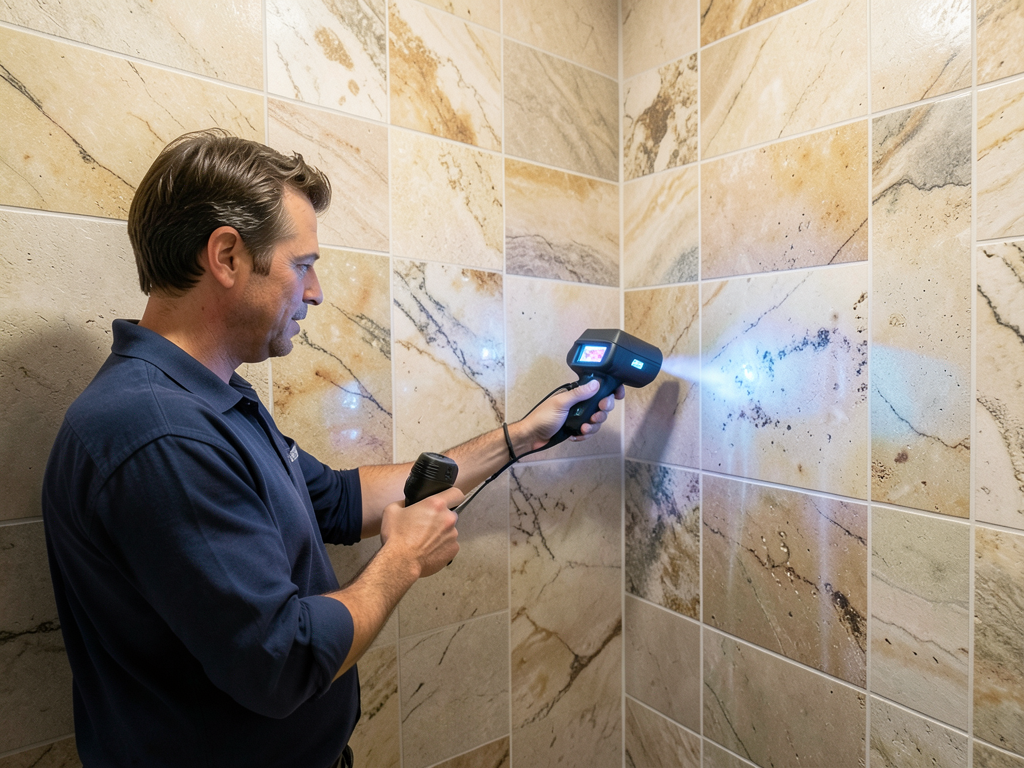
Image 1: Professional technician using thermal imaging camera to scan natural stone shower walls for hidden moisture patterns. The thermal scan reveals temperature variations indicating water presence behind the tile surface.
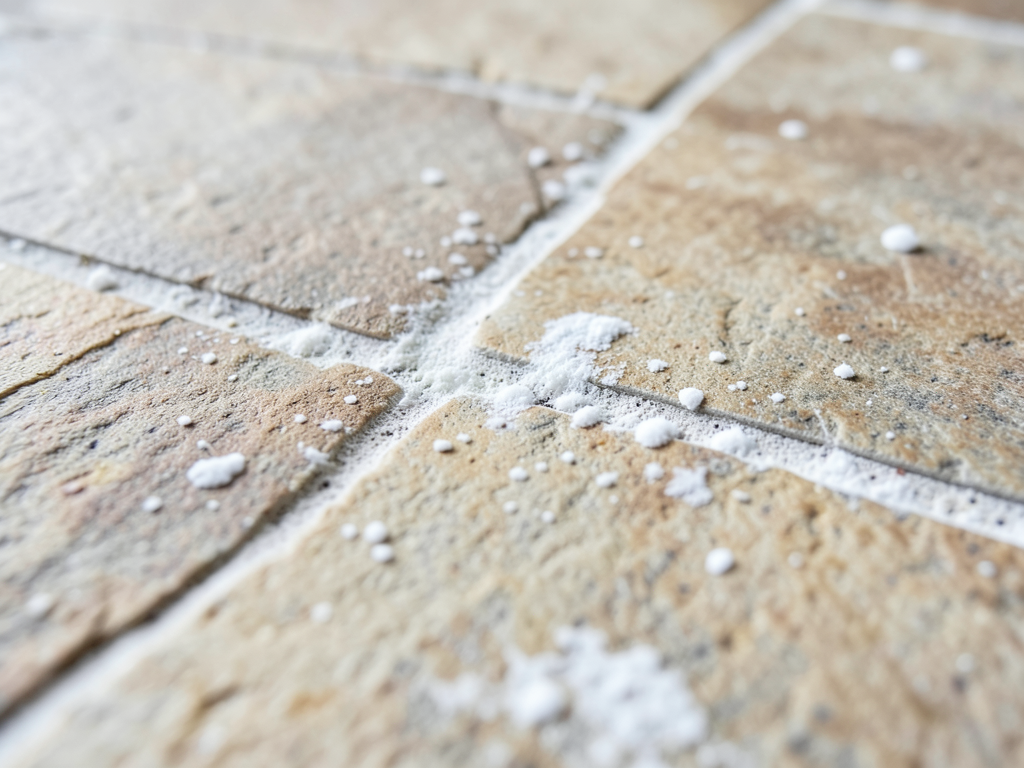
Image 2: Close-up view of efflorescence on natural stone tile showing white mineral deposits along grout lines. This visual evidence indicates ongoing water migration through the stone material.
Image 3: Moisture meter readings being taken on bathroom subfloor after shower leak detection. The meter shows elevated moisture content in wooden materials requiring professional drying and restoration.
Frequently Asked Questions
How can I tell if my natural stone shower has a hidden leak?
Look for musty odors, efflorescence (white powder), darkening stone, loose tiles, or cooler temperature spots on walls. Professional moisture meters and thermal imaging provide definitive detection of water behind stone surfaces.
How much does it cost to repair a leaking shower in Virginia Beach?
Repair costs vary widely based on damage extent, ranging from $500 for minor grout repairs to $5,000+ for complete shower reconstruction. Professional assessment determines the exact scope and provides accurate estimates for your specific situation.
Will my homeowners insurance cover shower leak damage?
Coverage depends on whether the leak is sudden and accidental versus gradual deterioration. Most policies cover sudden pipe bursts but may deny claims for slow leaks developing over time. Professional documentation helps support your claim regardless of cause.
How long does professional shower leak restoration take?
Simple repairs may take 1-2 days, while complete shower reconstruction typically requires 3-5 days including demolition, drying, and rebuilding. The timeline depends on damage extent and whether mold remediation is needed.
Can I just seal the stone to prevent leaks?
While sealing helps prevent water absorption, it doesn’t address underlying waterproofing failures or structural damage. Professional assessment determines whether sealing is sufficient or if more extensive repairs are needed to resolve the root cause.
What building codes apply to shower leak repairs in Virginia Beach?
All repairs must comply with Virginia Uniform Statewide Building Code requirements for wet areas, including specific waterproofing standards, drainage specifications, and material requirements. Professional restoration ensures full code compliance.
How often should natural stone showers be professionally inspected?
Annual professional inspections are recommended to detect developing issues before they cause significant damage. Regular maintenance including sealing every 12-18 months helps prevent water intrusion and extends shower system life.
What’s the difference between ceramic and natural stone shower leak detection?
Natural stone’s porosity allows water to migrate through the material itself, while ceramic leaks typically occur only through grout lines or substrate failures. This makes stone leak detection more complex and often requires specialized thermal imaging equipment.
Call (757) 909-5033 Today to Schedule Your Inspection
Don’t let a hidden shower leak turn into a major structural problem. The longer water damage goes untreated, the more extensive and expensive the repairs become. Our certified technicians use advanced thermal imaging and moisture detection equipment to find leaks behind your natural stone walls without destructive testing.
We understand the unique challenges of North End homes and provide fast, professional service that protects your investment. Whether you’re seeing early warning signs or already experiencing water damage, we’ll identify the source and provide a clear path to complete restoration.
Pick up the phone and call (757) 909-5033 before the next storm hits or the next shower reveals more damage. Our team is ready to help you protect your home and your health with professional water damage restoration services you can trust.
Don’t wait until you’re dealing with mold, structural damage, or insurance claim denials. Call (757) 909-5033 now for your comprehensive shower leak inspection and take the first step toward protecting your North End master bath. For more information, visit IICRC Standards.
You may also find this helpful. Why You Shouldn’t Hire a General Contractor to Fix a Water Leak in Virginia Beach.
{
“@context”: “https://schema.org”,
“@type”: “BlogPosting”,
“headline”: “Finding Leaks Behind Natural Stone Shower Walls in Your North End Master Bath”,
“description”: “Discover how to detect hidden leaks behind natural stone shower walls in Virginia Beach’s North End. Learn diagnostic signs, professional tools, and when to call Apex Water Damage Restoration.”,
“wordCount”: 2734,
“datePublished”: “2026-06-09T10:44:00.000Z”,
“dateModified”: “2026-06-09T10:44:00.000Z”,
“inLanguage”: “en-US”,
“mainEntityOfPage”: {
“@type”: “WebPage”,
“@id”: “https://apexwaterdamagerestorationvirginiabeach.com”
},
“publisher”: {
“@type”: “LocalBusiness”,
“name”: “Apex Water Damage Restoration Virginia Beach”,
“url”: “https://apexwaterdamagerestorationvirginiabeach.com”
},
“author”: {
“@type”: “Organization”,
“name”: “Apex Water Damage Restoration Virginia Beach”,
“url”: “https://apexwaterdamagerestorationvirginiabeach.com”
},
“image”: {
“@type”: “ImageObject”,
“url”: “https://apexwaterdamagerestorationvirginiabeach.com/wp-content/uploads/2026/03/finding-leaks-behind-natural-stone-shower-walls-in-1.png”
}
}
{
“@context”: “https://schema.org”,
“@type”: “LocalBusiness”,
“name”: “Apex Water Damage Restoration Virginia Beach”,
“url”: “https://apexwaterdamagerestorationvirginiabeach.com”,
“address”: {
“@type”: “PostalAddress”,
“addressLocality”: “Virginia Beach”
},
“areaServed”: {
“@type”: “City”,
“name”: “Virginia Beach”
}
}
{
“@context”: “https://schema.org”,
“@type”: “FAQPage”,
“mainEntity”: [
{
“@type”: “Question”,
“name”: “How can I tell if my natural stone shower has a hidden leak?”,
“acceptedAnswer”: {
“@type”: “Answer”,
“text”: “Look for musty odors, efflorescence (white powder), darkening stone, loose tiles, or cooler temperature spots on walls. Professional moisture meters and thermal imaging provide definitive detection of water behind stone surfaces.”
}
},
{
“@type”: “Question”,
“name”: “How much does it cost to repair a leaking shower in Virginia Beach?”,
“acceptedAnswer”: {
“@type”: “Answer”,
“text”: “Repair costs vary widely based on damage extent, ranging from $500 for minor grout repairs to $5,000+ for complete shower reconstruction. Professional assessment determines the exact scope and provides accurate estimates for your specific situation.”
}
},
{
“@type”: “Question”,
“name”: “Will my homeowners insurance cover shower leak damage?”,
“acceptedAnswer”: {
“@type”: “Answer”,
“text”: “Coverage depends on whether the leak is sudden and accidental versus gradual deterioration. Most policies cover sudden pipe bursts but may deny claims for slow leaks developing over time. Professional documentation helps support your claim regardless of cause.”
}
},
{
“@type”: “Question”,
“name”: “How long does professional shower leak restoration take?”,
“acceptedAnswer”: {
“@type”: “Answer”,
“text”: “Simple repairs may take 1-2 days, while complete shower reconstruction typically requires 3-5 days including demolition, drying, and rebuilding. The timeline depends on damage extent and whether mold remediation is needed.”
}
},
{
“@type”: “Question”,
“name”: “Can I just seal the stone to prevent leaks?”,
“acceptedAnswer”: {
“@type”: “Answer”,
“text”: “While sealing helps prevent water absorption, it doesn’t address underlying waterproofing failures or structural damage. Professional assessment determines whether sealing is sufficient or if more extensive repairs are needed to resolve the root cause.”
}
},
{
“@type”: “Question”,
“name”: “What building codes apply to shower leak repairs in Virginia Beach?”,
“acceptedAnswer”: {
“@type”: “Answer”,
“text”: “All repairs must comply with Virginia Uniform Statewide Building Code requirements for wet areas, including specific waterproofing standards, drainage specifications, and material requirements. Professional restoration ensures full code compliance.”
}
},
{
“@type”: “Question”,
“name”: “How often should natural stone showers be professionally inspected?”,
“acceptedAnswer”: {
“@type”: “Answer”,
“text”: “Annual professional inspections are recommended to detect developing issues before they cause significant damage. Regular maintenance including sealing every 12-18 months helps prevent water intrusion and extends shower system life.”
}
},
{
“@type”: “Question”,
“name”: “What’s the difference between ceramic and natural stone shower leak detection?”,
“acceptedAnswer”: {
“@type”: “Answer”,
“text”: “Natural stone’s porosity allows water to migrate through the material itself, while ceramic leaks typically occur only through grout lines or substrate failures. This makes stone leak detection more complex and often requires specialized thermal imaging equipment.”
}
}
]
}
{
“@context”: “https://schema.org”,
“@type”: “BreadcrumbList”,
“itemListElement”: [
{
“@type”: “ListItem”,
“position”: 1,
“name”: “Home”,
“item”: “https://apexwaterdamagerestorationvirginiabeach.com”
},
{
“@type”: “ListItem”,
“position”: 2,
“name”: “Blog”,
“item”: “https://apexwaterdamagerestorationvirginiabeach.com/blog”
},
{
“@type”: “ListItem”,
“position”: 3,
“name”: “Finding Leaks Behind Natural Stone Shower Walls in Your North End Master Bath”
}
]
}
{
“@context”: “https://schema.org”,
“@type”: “Service”,
“serviceType”: “Water Damage Restoration”,
“provider”: {
“@type”: “LocalBusiness”,
“name”: “Apex Water Damage Restoration Virginia Beach”,
“url”: “https://apexwaterdamagerestorationvirginiabeach.com”
},
“areaServed”: {
“@type”: “City”,
“name”: “Virginia Beach”
},
“description”: “Discover how to detect hidden leaks behind natural stone shower walls in Virginia Beach’s North End. Learn diagnostic signs, professional tools, and when to call Apex Water Damage Restoration.”
}