Keeping Your Pets Safe from Contaminated Flood Water in Virginia Beach
Floodwaters in Virginia Beach contain dangerous bacteria, chemicals, and debris that can harm your pets within minutes. When storm surge from the Chesapeake Bay or a burst pipe floods your home, the water touching your pet’s paws or fur may carry sewage, industrial runoff, and harmful pathogens. Your dog or cat cannot tell you when water feels wrong, so you must act fast to keep them safe. Repairing Water Damage at Your Virginia Beach Oceanfront Property After a Storm.
Virginia Beach’s coastal location creates unique flood risks. Brackish water from the bay mixes with street runoff, creating a toxic soup of contaminants. Pets exposed to this water face immediate dangers like salt poisoning and leptospirosis, plus long-term risks from mold growth in flooded homes. The humid Virginia climate means mold can start growing on pet-level surfaces within 24-48 hours after flooding. What Virginia Beach Town Center Condo Owners Should Do After a Leak.
Immediate Steps for Pet Safety During and After a Flood
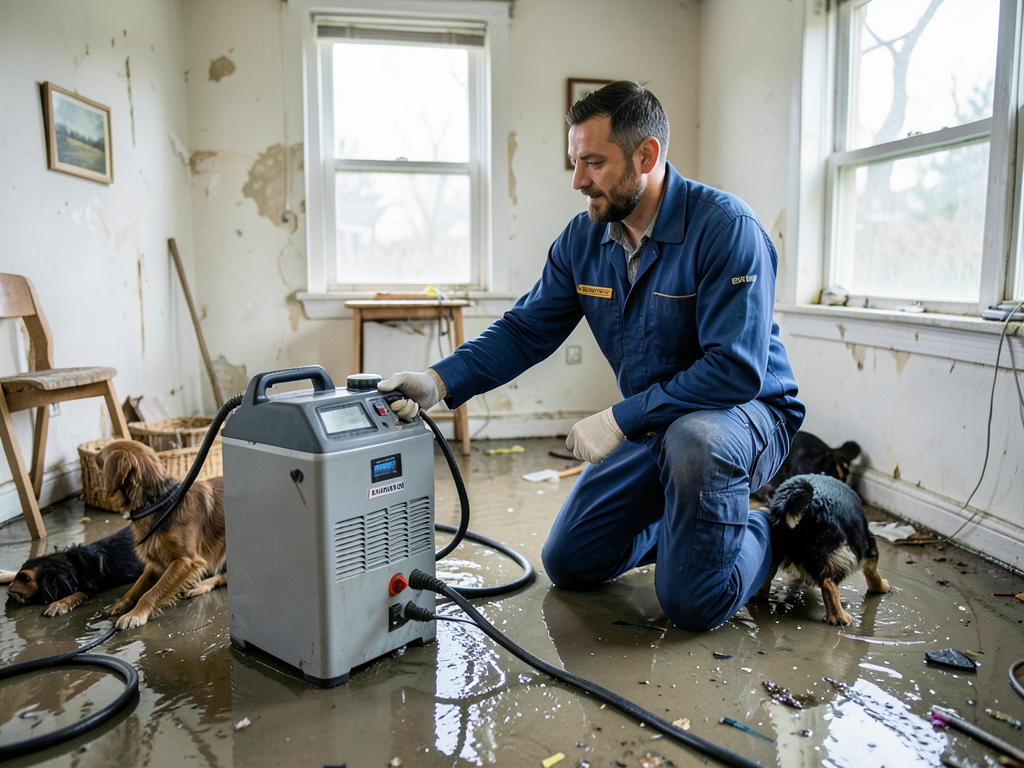
When floodwaters rise, your pet’s safety depends on quick action. Keep your emergency kit ready with food, water, medications, and vaccination records. Leash your pet immediately – scared animals bolt toward danger when they smell floodwater. Never let pets drink from standing water, even if they seem thirsty. Who to Call for Emergency Water Removal in Virginia Beach Right Now.
If you must evacuate, call ahead to confirm pet-friendly shelters or hotels. Many Virginia Beach emergency shelters do not accept animals during hurricanes. Keep a recent photo of your pet on your phone in case you get separated. After the water recedes, check your yard for displaced wildlife like snakes or rodents that may have taken shelter during the flood. EPA flood safety guidelines.
Hidden Hazards in Virginia Beach Floodwaters
Virginia Beach floodwater contains more than just rainwater. The mix of brackish bay water and urban runoff creates Category 3 water damage – the most dangerous type. This water carries sewage, chemicals from lawn treatments, and bacteria from decaying organic matter. Your pet’s paws absorb these contaminants directly through their skin.
Coastal flooding brings specific risks. Salt poisoning occurs when pets drink brackish water or lick salt residue from their fur. Leptospirosis bacteria thrive in warm, wet conditions common to Virginia Beach from June through October. This disease causes kidney failure in dogs and can be fatal within days. Standing water also breeds mosquitoes that carry heartworm disease.
Post-Flood Health Monitoring
After any flood exposure, watch your pet closely for 72 hours. Symptoms of contamination include vomiting, diarrhea, excessive thirst, lethargy, or red irritated paws. Paw pad burns from chemical exposure feel hot to touch and may cause limping. Gastrointestinal distress often appears within 12-24 hours after exposure to contaminated water.
Virginia Beach’s high humidity means mold grows faster than in drier climates. Check your pet’s bedding, food bowls, and favorite resting spots for musty odors or visible mold. Pets are more sensitive to mold spores than humans because they live closer to the floor where mold concentrations are highest. Sneezing, coughing, or skin rashes may indicate mold exposure.
Decontaminating Your Home for Pets
DIY cleaning cannot remove all flood contaminants that threaten your pets. Professional water restoration uses industrial-grade dehumidifiers and antimicrobial treatments that eliminate bacteria at the molecular level. Standard household cleaners leave residues that may harm pets when they walk or lie on treated surfaces.
Professional technicians follow EPA guidelines for Category 3 water damage. They remove contaminated drywall up to four feet high – the level where pet noses and paws typically contact walls. Industrial air scrubbers filter out mold spores as small as 0.3 microns, creating air quality safe for sensitive pet respiratory systems.
Virginia Beach Emergency Resources
Virginia Beach Animal Control operates a 24-hour emergency line at (757) 385-4444 for animal-related flood emergencies. The Virginia Beach SPCA at 3040 Holland Road accepts displaced pets during declared emergencies. For immediate veterinary care, the Virginia Beach Veterinary Emergency and Specialty Center on South Independence Boulevard provides 24/7 emergency services. Immediate Steps for a Burst Pipe Repair in the Hilltop Neighborhood.
During hurricane season, monitor the Virginia Beach city website for pet-friendly shelter openings. The city partners with local hotels to provide emergency housing for pets when shelters reach capacity. Keep your pet’s microchip information current and register them with Finding Rover, a free facial recognition service that helps reunite lost pets with owners.
Creating a Pet Emergency Flood Kit
Prepare a waterproof container with seven days of your pet’s food, bottled water, medications, and collapsible bowls. Include a pet first-aid kit with antiseptic wipes safe for animal use. Pack familiar toys or bedding to reduce stress during evacuation. Store copies of vaccination records in a sealed plastic bag.
Add a slip leash and harness to your kit – frightened pets often slip out of regular collars. Include current photos showing any distinctive markings. Write your contact information and your veterinarian’s phone number on an index card. Consider a pet alert window cling for your front door to notify rescuers of animals inside.
Post-Flood Yard Safety for Pets
Floodwaters displace wildlife into residential areas. Check your yard thoroughly before letting pets outside. Snakes seek dry ground and may hide under debris. Rats and mice move into homes, bringing diseases that can infect pets. Remove all standing water where mosquitoes breed.
Test your soil before letting pets dig or roll in the yard. Floodwaters may have contaminated soil with chemicals or bacteria. Wait at least 48 hours after water recedes before allowing pet access. Watch for unusual animal behavior – if birds avoid your yard or insects swarm, dangerous contaminants may still be present.
Long-Term Flood Recovery for Pet Owners
Professional water damage restoration protects your pets during the months following a flood. Mold remediation requires specialized equipment that homeowners cannot rent. Industrial dehumidifiers pull moisture from deep within walls where pet-level mold grows unseen. Antimicrobial treatments create barriers that prevent bacterial regrowth. Expert Mold Remediation for Vacation Rentals in Sandbridge.
Virginia Beach’s coastal climate means moisture problems persist long after visible flooding ends. Professional restoration includes moisture mapping to find hidden water pockets behind walls or under flooring. These areas become breeding grounds for bacteria that can make pets sick months later. Regular air quality testing ensures your home remains safe for sensitive animal respiratory systems.
Understanding Local Flood Risks
Virginia Beach sits in FEMA-designated high-risk flood zones. The city’s flat topography and proximity to multiple water bodies create frequent flooding even during minor storms. Areas near the Lynnhaven River, especially in the Great Neck and Princess Anne Plaza neighborhoods, experience regular tidal flooding that brings contaminated bay water into homes. FEMA flood zone information.
The Virginia Uniform Statewide Building Code requires specific flood-resistant construction in these zones. Homes must have electrical outlets and HVAC equipment elevated above the base flood elevation. Professional water restoration companies understand these requirements and ensure repairs meet local code while protecting your pets from future flood risks.
Insurance and Financial Protection
Standard homeowners insurance does not cover flood damage. Virginia Beach residents need separate flood insurance through the National Flood Insurance Program. Document all pet-related damage for insurance claims, including veterinary bills for flood-related illnesses and replacement costs for contaminated pet supplies.
Keep receipts for professional water restoration services. Insurance companies often require documentation showing proper Category 3 water damage cleanup. Without professional remediation, hidden moisture can cause structural damage that insurance may later deny, leaving you unable to properly protect your pets from ongoing health risks.
Building a Pet-Safe Home
Design your home with pet safety in mind. Use mold-resistant materials in flood-prone areas like basements and laundry rooms. Install pet doors that seal tightly to prevent water intrusion. Choose flooring that does not trap moisture, such as sealed concrete or luxury vinyl plank.
Elevate pet food and water bowls on stands to keep them above potential flood levels. Store pet medications in waterproof containers on high shelves. Create a designated safe room on an upper floor where pets can stay during floods. This room should have minimal carpeting and easy-to-clean surfaces.
Community Support for Pet Safety
Virginia Beach has a strong network of pet owners who help each other during emergencies. Join local Facebook groups like “Virginia Beach Pet Parents” to stay informed about flood risks and share resources. The Hampton Roads Emergency Management Committee coordinates animal evacuation plans with local veterinarians and pet supply stores.
Many Virginia Beach neighborhoods have established pet watch programs similar to neighborhood watch. These groups share information about local flooding patterns and help elderly or disabled pet owners prepare for emergencies. Building these community connections before disaster strikes ensures faster help when floods threaten your pets.
Professional Assessment and Peace of Mind
After any flood, have a professional assess your home’s safety for pets. Moisture meters can detect hidden water that homeowners miss. Air quality tests reveal mold spores too small to see. Professional assessment costs less than treating a pet for flood-related illness and provides documentation for insurance claims.
Professional water restoration companies in Virginia Beach understand local building codes and flood patterns. They can identify structural issues that may lead to future flooding and recommend preventive measures. This expertise protects both your property investment and your pets’ health for years to come.
Frequently Asked Questions
How soon after a flood can I let my pets back in the house?
Wait until professional water restoration confirms all Category 3 water has been removed and antimicrobial treatment is complete. This typically takes 24-72 hours depending on damage extent. Never allow pets in flooded areas until all standing water is gone and surfaces are dry to touch.
What are the signs my pet was exposed to contaminated flood water?
Watch for vomiting, diarrhea, excessive thirst, lethargy, red irritated paws, or unusual behavior within 72 hours of exposure. Paw pad burns feel hot and may cause limping. Gastrointestinal symptoms often appear within 12-24 hours. Contact your veterinarian immediately if you notice any of these signs.
Can I clean up flood water myself if I have pets?
DIY cleaning cannot remove all pathogens that threaten pets. Professional restoration uses industrial-grade equipment and EPA-approved antimicrobial treatments that eliminate bacteria at the molecular level. Household cleaners leave residues that may harm pets when they walk on treated surfaces.
How long does mold take to grow after flooding in Virginia Beach?
In Virginia Beach’s humid coastal climate, mold can start growing within 24-48 hours after flooding. Pet-level surfaces like carpet, drywall, and furniture are especially vulnerable because pets live close to the floor where moisture and mold spores concentrate.
What should I include in a pet emergency flood kit?
Include seven days of food and water, medications, collapsible bowls, a pet first-aid kit, familiar toys, vaccination records, a slip leash and harness, current photos, and your veterinarian’s contact information. Store everything in a waterproof container that’s easy to grab during evacuation.
Are there pet-friendly emergency shelters in Virginia Beach?
Some Virginia Beach emergency shelters accept pets during declared emergencies, but many do not. Check the Virginia Beach city website for current pet-friendly shelter locations. Many hotels in the area also offer emergency pet housing during hurricanes and major floods.
How do I know if my home is in a flood zone?
Check the FEMA Flood Map Service Center online or contact Virginia Beach floodplain management at (757) 385-4211. Homes near the Lynnhaven River, Chesapeake Bay, and low-lying areas of Great Neck and Princess Anne Plaza are in high-risk flood zones requiring special building codes and insurance.
Call (757) 909-5033 today to schedule your inspection. Don’t wait until the next storm hits. Professional water restoration protects your pets from hidden dangers that DIY cleaning cannot reach. Your furry family members deserve a safe, healthy home. Pick up the phone and call (757) 909-5033 before contaminated water threatens your pets’ health.
{
“@context”: “https://schema.org”,
“@type”: “BlogPosting”,
“headline”: “Keeping Your Pets Safe from Contaminated Flood Water in Virginia Beach”,
“description”: “Protect your pets from flood hazards in Virginia Beach. Learn about contaminated water risks, emergency resources, and post-flood home sanitation for animal safety.”,
“wordCount”: 1991,
“datePublished”: “2026-05-15T15:05:00.000Z”,
“dateModified”: “2026-05-15T15:05:00.000Z”,
“inLanguage”: “en-US”,
“mainEntityOfPage”: {
“@type”: “WebPage”,
“@id”: “https://apexwaterdamagerestorationvirginiabeach.com”
},
“publisher”: {
“@type”: “LocalBusiness”,
“name”: “Apex Water Damage Restoration Virginia Beach”,
“url”: “https://apexwaterdamagerestorationvirginiabeach.com”
},
“author”: {
“@type”: “Organization”,
“name”: “Apex Water Damage Restoration Virginia Beach”,
“url”: “https://apexwaterdamagerestorationvirginiabeach.com”
},
“image”: {
“@type”: “ImageObject”,
“url”: “https://apexwaterdamagerestorationvirginiabeach.com/wp-content/uploads/2026/03/keeping-your-pets-safe-from-contaminated-flood-wat-1.png”
}
}
{
“@context”: “https://schema.org”,
“@type”: “LocalBusiness”,
“name”: “Apex Water Damage Restoration Virginia Beach”,
“url”: “https://apexwaterdamagerestorationvirginiabeach.com”,
“address”: {
“@type”: “PostalAddress”,
“addressLocality”: “Virginia Beach”
},
“areaServed”: {
“@type”: “City”,
“name”: “Virginia Beach”
}
}
{
“@context”: “https://schema.org”,
“@type”: “FAQPage”,
“mainEntity”: [
{
“@type”: “Question”,
“name”: “How soon after a flood can I let my pets back in the house?”,
“acceptedAnswer”: {
“@type”: “Answer”,
“text”: “Wait until professional water restoration confirms all Category 3 water has been removed and antimicrobial treatment is complete. This typically takes 24-72 hours depending on damage extent. Never allow pets in flooded areas until all standing water is gone and surfaces are dry to touch.”
}
},
{
“@type”: “Question”,
“name”: “What are the signs my pet was exposed to contaminated flood water?”,
“acceptedAnswer”: {
“@type”: “Answer”,
“text”: “Watch for vomiting, diarrhea, excessive thirst, lethargy, red irritated paws, or unusual behavior within 72 hours of exposure. Paw pad burns feel hot and may cause limping. Gastrointestinal symptoms often appear within 12-24 hours. Contact your veterinarian immediately if you notice any of these signs.”
}
},
{
“@type”: “Question”,
“name”: “Can I clean up flood water myself if I have pets?”,
“acceptedAnswer”: {
“@type”: “Answer”,
“text”: “DIY cleaning cannot remove all pathogens that threaten pets. Professional restoration uses industrial-grade equipment and EPA-approved antimicrobial treatments that eliminate bacteria at the molecular level. Household cleaners leave residues that may harm pets when they walk on treated surfaces.”
}
},
{
“@type”: “Question”,
“name”: “How long does mold take to grow after flooding in Virginia Beach?”,
“acceptedAnswer”: {
“@type”: “Answer”,
“text”: “In Virginia Beach’s humid coastal climate, mold can start growing within 24-48 hours after flooding. Pet-level surfaces like carpet, drywall, and furniture are especially vulnerable because pets live close to the floor where moisture and mold spores concentrate.”
}
},
{
“@type”: “Question”,
“name”: “What should I include in a pet emergency flood kit?”,
“acceptedAnswer”: {
“@type”: “Answer”,
“text”: “Include seven days of food and water, medications, collapsible bowls, a pet first-aid kit, familiar toys, vaccination records, a slip leash and harness, current photos, and your veterinarian’s contact information. Store everything in a waterproof container that’s easy to grab during evacuation.”
}
},
{
“@type”: “Question”,
“name”: “Are there pet-friendly emergency shelters in Virginia Beach?”,
“acceptedAnswer”: {
“@type”: “Answer”,
“text”: “Some Virginia Beach emergency shelters accept pets during declared emergencies, but many do not. Check the Virginia Beach city website for current pet-friendly shelter locations. Many hotels in the area also offer emergency pet housing during hurricanes and major floods.”
}
},
{
“@type”: “Question”,
“name”: “How do I know if my home is in a flood zone?”,
“acceptedAnswer”: {
“@type”: “Answer”,
“text”: “Check the FEMA Flood Map Service Center online or contact Virginia Beach floodplain management at (757) 385-4211. Homes near the Lynnhaven River, Chesapeake Bay, and low-lying areas of Great Neck and Princess Anne Plaza are in high-risk flood zones requiring special building codes and insurance.”
}
}
]
}
{
“@context”: “https://schema.org”,
“@type”: “BreadcrumbList”,
“itemListElement”: [
{
“@type”: “ListItem”,
“position”: 1,
“name”: “Home”,
“item”: “https://apexwaterdamagerestorationvirginiabeach.com”
},
{
“@type”: “ListItem”,
“position”: 2,
“name”: “Blog”,
“item”: “https://apexwaterdamagerestorationvirginiabeach.com/blog”
},
{
“@type”: “ListItem”,
“position”: 3,
“name”: “Keeping Your Pets Safe from Contaminated Flood Water in Virginia Beach”
}
]
}
{
“@context”: “https://schema.org”,
“@type”: “Service”,
“serviceType”: “Water Damage Restoration”,
“provider”: {
“@type”: “LocalBusiness”,
“name”: “Apex Water Damage Restoration Virginia Beach”,
“url”: “https://apexwaterdamagerestorationvirginiabeach.com”
},
“areaServed”: {
“@type”: “City”,
“name”: “Virginia Beach”
},
“description”: “Protect your pets from flood hazards in Virginia Beach. Learn about contaminated water risks, emergency resources, and post-flood home sanitation for animal safety.”
}