Why You Shouldn’t Hire a General Contractor to Fix a Water Leak in Virginia Beach
Water damage in Virginia Beach moves fast. Within 24-48 hours, moisture from a burst pipe or storm surge can trigger mold growth that spreads through your walls and under your floors. The humid coastal climate accelerates this process, making immediate response critical. While a general contractor builds and remodels homes, they lack the specialized equipment, IICRC certifications, and emergency response protocols needed to stop water damage before it becomes a structural and health hazard. IICRC S500 Standard for Professional Water Damage Restoration.
A restoration company operates on a different timeline. They arrive within hours with industrial-grade dehumidifiers, moisture meters, and HEPA air scrubbers. They document damage for insurance claims using Xactimate software and follow EPA guidelines for mold remediation. Most importantly, they understand Virginia Beach’s unique challenges—from the high water table in Pungo to the flood zones along the Chesapeake Bay—and how these factors affect drying times and structural integrity. EPA Lead Renovation, Repair and Painting Rule.
When water hits your Virginia Beach home, you need specialists who can extract, dry, and sanitize before reconstruction begins. This article explains the critical differences between restoration companies and general contractors, helping you make the right call when every minute counts. Repairing Water Damage at Your Virginia Beach Oceanfront Property After a Storm.
The First 24 Hours Matter Most in Coastal Virginia
Virginia Beach’s coastal environment creates unique water damage challenges that general contractors aren’t trained to handle. The region’s high humidity—averaging 75% year-round—means water doesn’t evaporate naturally. Without industrial dehumidification, moisture remains trapped in building materials, creating perfect conditions for mold growth within 48 hours. What Virginia Beach Town Center Condo Owners Should Do After a Leak.
Consider what happens when a pipe bursts in a Kempsville home. A general contractor might arrive the next day, assess the damage, and provide a rebuild estimate. Meanwhile, the restoration company would have already extracted standing water, set up commercial-grade drying equipment, and begun moisture mapping to identify hidden damage in wall cavities and under flooring. Who to Call for Emergency Water Removal in Virginia Beach Right Now.
The difference isn’t just speed—it’s methodology. Restoration technicians use psychrometric calculations to determine optimal drying conditions. They monitor moisture content in wood framing, checking that it drops below 16% before removing equipment. This scientific approach prevents the secondary damage that occurs when water-damaged materials are simply replaced without proper drying.
Equipment Gap: Industrial Tools vs. Construction Basics
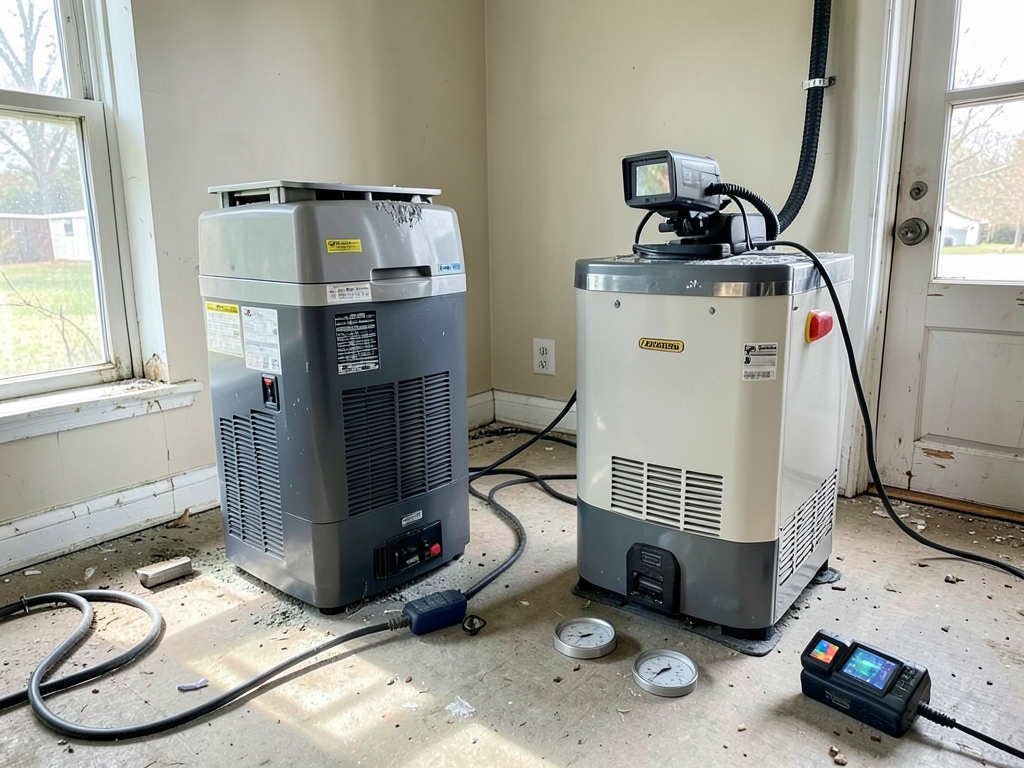
The equipment difference between a restoration company and a general contractor is substantial. Restoration specialists arrive with truck-mounted extractors capable of removing 20+ gallons of water per minute. They deploy commercial dehumidifiers that remove 150-200 pints of moisture daily—far beyond the capacity of residential units.
Moisture detection technology reveals what the eye cannot see. Restoration technicians use infrared cameras to identify temperature variations indicating water presence. They employ penetrating and non-penetrating moisture meters to test materials at different depths. These tools identify water trapped behind walls or under floors—damage a general contractor might miss until demolition begins.
Air quality control represents another critical difference. Restoration companies use HEPA air scrubbers that filter particles down to 0.3 microns, removing mold spores and other contaminants from the air. They establish containment barriers to prevent cross-contamination during the drying process. General contractors typically lack this specialized equipment and training.
The cost difference in equipment alone—often $50,000-$100,000 in specialized tools—means restoration companies can handle water damage more effectively. They don’t just remove water; they control the entire drying environment to prevent secondary damage.
Certification Standards: IICRC vs. Contractor Licensing
Virginia requires general contractors to hold Class A, B, or C licenses through the Department of Professional and Occupational Regulation (DPOR). These licenses cover construction, remodeling, and repair work. However, they don’t include specialized training in water damage restoration, mold remediation, or emergency mitigation procedures. Expert Mold Remediation for Vacation Rentals in Sandbridge.
Restoration companies employ technicians certified by the Institute of Inspection Cleaning and Restoration Certification (IICRC). The S500 standard governs water damage restoration, requiring technicians to understand psychrometry, material science, and health and safety protocols. These certifications aren’t optional—they’re industry requirements for professional restoration work.
The EPA’s Lead Renovation, Repair and Painting (RRP) Rule adds another layer of complexity. Homes built before 1978 require lead-safe practices during any renovation. Restoration companies maintain EPA certification for lead-safe work, while many general contractors may not have this specialized training.
Insurance companies recognize these certification differences. They often require IICRC-certified technicians for water damage claims, particularly those involving Category 2 or 3 water (gray or black water from sewage backups or flooding). A general contractor’s standard license doesn’t meet these insurance requirements.
Insurance Navigation: Direct Billing vs. Reconstruction Estimates
Restoration companies speak insurance companies’ language. They use Xactimate software, the industry-standard estimating platform that insurance adjusters use. This means estimates are formatted correctly, priced according to insurance guidelines, and processed faster than traditional construction bids.
The claims process differs significantly between the two professions. Restoration companies often provide direct insurance billing, handling paperwork and communication with adjusters. They document damage with photos, moisture readings, and detailed reports that support the claim. This advocacy can mean the difference between a denied claim and full coverage.
General contractors typically provide construction estimates after the damage is assessed. These estimates may not align with insurance company pricing structures or may lack the documentation needed for claim approval. The contractor might need to wait for insurance approval before beginning work, extending the timeline when immediate action is critical. Immediate Steps for a Burst Pipe Repair in the Hilltop Neighborhood.
Virginia Beach’s proximity to military installations adds another layer. Many homes in areas like Little Creek and Dam Neck belong to military families with specific insurance requirements. Restoration companies familiar with military housing policies and TRICARE procedures can navigate these claims more effectively than general contractors.
Response Time: Emergency vs. Scheduled Service
Water damage doesn’t wait for business hours. Restoration companies operate 24/7 emergency response teams. When a pipe bursts at 2 AM or a storm floods your basement at midnight, these specialists can arrive within 60-90 minutes with the equipment needed to begin mitigation immediately.
General contractors typically operate during standard business hours. Even emergency contractors may take 4-6 hours to respond, and they often arrive with basic tools rather than specialized water damage equipment. This delay allows water to spread, materials to absorb moisture, and mold to begin growing.
The Virginia Beach area’s vulnerability to hurricanes and nor’easters makes rapid response even more critical. When a storm hits the coast, restoration companies mobilize multiple teams to handle the surge in calls. They maintain equipment inventories specifically for large-scale events, while general contractors may lack the resources to respond to widespread emergencies.
Consider the difference during a king tide event in Chic’s Beach. Restoration companies understand how these extreme high tides affect drainage and can deploy preventive measures. They know which neighborhoods are most vulnerable and maintain relationships with local emergency management officials.
When to Call Each Professional: A Clear Decision Framework
Understanding when to call a restoration company versus a general contractor can save you thousands of dollars and prevent extensive property damage. Here’s a decision framework based on the type and extent of water damage:
- Category 1 Water (Clean Water)
Call a restoration company if water affects more than 10 square feet, involves multiple rooms, or has been present more than 24 hours. Examples: burst pipe, overflowing sink, water heater leak.
- Category 2 Water (Gray Water)
Always call a restoration company. This water contains contaminants from washing machines, dishwashers, or clean toilet overflows. It requires specialized handling and sanitation procedures.
- Category 3 Water (Black Water)
Emergency restoration company required immediately. This includes sewage backups, flooding from rivers or seawater, and water containing hazardous materials. Health risks are severe.
- Post-Drying Reconstruction
After professional drying and documentation, call a general contractor for rebuild work: replacing drywall, installing new flooring, painting, and finishing.
The key distinction: restoration companies handle the emergency phase—extraction, drying, and mitigation. General contractors handle the rebuild phase—replacing damaged materials and restoring the structure.
The Virginia Beach Factor: Local Challenges Require Local Expertise
Virginia Beach’s unique geography creates water damage scenarios that require specialized knowledge. The city’s low elevation—much of it sits at or below sea level—means groundwater intrusion is common. Homes in flood zones AE and VE require specific mitigation approaches that general contractors may not understand.
The sandy soil composition affects how water moves through the ground. Water drains quickly through sand but can also undermine foundations if not properly managed. Restoration companies understand these soil dynamics and how they impact drying strategies and structural repairs.
Nor’easters and hurricanes bring wind-driven rain that can penetrate building envelopes in ways that differ from simple plumbing leaks. Restoration technicians know how to identify and address this type of damage, which often includes hidden moisture in wall cavities and under roof decking.
Coastal humidity affects everything from drying times to material selection. What works in Richmond or Northern Virginia may fail in Virginia Beach’s marine environment. Restoration companies factor in these local conditions when developing mitigation plans.
Cost Comparison: Short-Term Savings vs. Long-Term Protection
A general contractor might offer a lower initial bid for water damage repair, but this can lead to higher costs long-term. Without proper drying, you risk:
- Structural damage from trapped moisture
- Mold remediation costs ($5,000-$25,000 typically)
- Health issues from mold exposure
- Decreased property value
- Insurance claim denials for improper repairs
Restoration companies provide detailed documentation that proves proper mitigation was completed. This documentation protects you if you sell the home later or need to file additional insurance claims. The initial investment in professional restoration often saves money by preventing these secondary issues.
Many restoration companies work with insurance adjusters to ensure all covered damage is included in the claim. They understand insurance pricing and can often complete work for the amount the insurance company will pay, eliminating out-of-pocket expenses for the homeowner.
The Hybrid Approach: Best of Both Worlds
The most effective approach often combines both professionals. A restoration company handles the emergency response, drying, and documentation. Once the structure is certified dry and all mitigation is complete, a general contractor takes over for reconstruction.
This partnership approach ensures you get the rapid response and specialized equipment needed for emergency mitigation, followed by quality reconstruction work. Many restoration companies maintain relationships with trusted general contractors and can coordinate this transition smoothly.
Some full-service companies employ both restoration technicians and construction crews, offering a complete solution from emergency response through final rebuild. This eliminates the coordination challenges of working with multiple companies.
Making the Right Call When Every Minute Counts
When water damage strikes your Virginia Beach home, the clock starts ticking immediately. Mold begins growing within 24-48 hours in our humid coastal climate. The longer water sits, the more extensive and expensive the damage becomes.
Ask yourself these questions when deciding who to call:
- Is this an active leak or standing water situation?
- Has water been present for more than 24 hours?
- Are there signs of moisture in walls, ceilings, or floors?
- Do you need emergency response right now?
- Will insurance be involved in the claim?
If you answer yes to any of these questions, a restoration company is your best first call. They can assess the situation, begin mitigation immediately, and determine if a general contractor is needed for subsequent reconstruction.
Remember: you can always call a general contractor after the emergency is handled. But if you start with a contractor, you might face delays, incomplete mitigation, and preventable secondary damage that costs thousands more to repair.
Frequently Asked Questions
Can’t my regular handyman handle a small water leak?
For very minor issues—like a small under-sink leak caught immediately—a handyman might suffice. However, without moisture detection equipment, they can’t verify that surrounding materials are truly dry. In Virginia Beach’s humid climate, what seems minor can quickly become major.
Will my insurance cover restoration company services?
Most homeowners insurance policies cover water damage restoration when it results from sudden, accidental events like burst pipes or storm damage. Restoration companies typically provide free estimates and can verify coverage before beginning work. They also handle the documentation insurance companies require.
How long does the restoration process take?
The emergency mitigation phase typically takes 3-5 days, depending on the extent of damage and materials affected. Drying times vary based on humidity, temperature, and how much water was present. Your restoration company will provide daily monitoring and updates throughout the process.
What if I’ve already started cleanup myself?
Stop and call a professional immediately. Well-intentioned DIY efforts often miss hidden moisture that leads to mold growth. Restoration companies can assess what’s been done and implement professional drying procedures to prevent secondary damage.
Are restoration companies more expensive than general contractors?
Initial emergency response costs may be higher, but restoration companies often save you money long-term by preventing secondary damage. They also work within insurance pricing structures and can often complete work for the amount your insurance will pay, reducing out-of-pocket expenses.
Don’t Wait Until It’s Too Late
Water damage in Virginia Beach demands immediate, professional attention. The humid coastal climate means every hour counts when water invades your home. While general contractors build and remodel, restoration companies specialize in the emergency response and scientific drying that prevents secondary damage.
The next time water threatens your Virginia Beach property, make the call that protects your home and your health. Restoration specialists arrive with the equipment, certifications, and local knowledge needed to handle our unique coastal challenges. They document everything for insurance, work 24/7 when emergencies strike, and understand the science behind proper structural drying.
Don’t let a general contractor’s construction expertise become a liability when you need emergency water damage mitigation. The right professional at the right time can mean the difference between a quick recovery and a costly, drawn-out restoration process that includes mold remediation and structural repairs.
Call (757) 909-5033 today to schedule your inspection or request emergency service. Our IICRC-certified technicians are ready to respond 24/7 to protect your Virginia Beach home from water damage and prevent the secondary issues that occur when mitigation is delayed.
{
“@context”: “https://schema.org”,
“@type”: “BlogPosting”,
“headline”: “Why You Shouldn’t Hire a General Contractor to Fix a Water Leak in Virginia Beach”,
“description”: “Learn why IICRC-certified restoration specialists outperform general contractors for Virginia Beach water damage. Discover the critical differences in equipment, training, and response time.”,
“wordCount”: 2371,
“datePublished”: “2026-06-04T14:47:00.000Z”,
“dateModified”: “2026-06-04T14:47:00.000Z”,
“inLanguage”: “en-US”,
“mainEntityOfPage”: {
“@type”: “WebPage”,
“@id”: “https://apexwaterdamagerestorationvirginiabeach.com”
},
“publisher”: {
“@type”: “LocalBusiness”,
“name”: “Apex Water Damage Restoration Virginia Beach”,
“url”: “https://apexwaterdamagerestorationvirginiabeach.com”
},
“author”: {
“@type”: “Organization”,
“name”: “Apex Water Damage Restoration Virginia Beach”,
“url”: “https://apexwaterdamagerestorationvirginiabeach.com”
},
“image”: {
“@type”: “ImageObject”,
“url”: “https://apexwaterdamagerestorationvirginiabeach.com/wp-content/uploads/2026/03/why-you-shouldn-t-hire-a-general-contractor-to-fix-1.png”
}
}
{
“@context”: “https://schema.org”,
“@type”: “LocalBusiness”,
“name”: “Apex Water Damage Restoration Virginia Beach”,
“url”: “https://apexwaterdamagerestorationvirginiabeach.com”,
“address”: {
“@type”: “PostalAddress”,
“addressLocality”: “Virginia Beach”
},
“areaServed”: {
“@type”: “City”,
“name”: “Virginia Beach”
}
}
{
“@context”: “https://schema.org”,
“@type”: “FAQPage”,
“mainEntity”: [
{
“@type”: “Question”,
“name”: “Can’t my regular handyman handle a small water leak?”,
“acceptedAnswer”: {
“@type”: “Answer”,
“text”: “For very minor issues—like a small under-sink leak caught immediately—a handyman might suffice. However, without moisture detection equipment, they can’t verify that surrounding materials are truly dry. In Virginia Beach’s humid climate, what seems minor can quickly become major.”
}
},
{
“@type”: “Question”,
“name”: “Will my insurance cover restoration company services?”,
“acceptedAnswer”: {
“@type”: “Answer”,
“text”: “Most homeowners insurance policies cover water damage restoration when it results from sudden, accidental events like burst pipes or storm damage. Restoration companies typically provide free estimates and can verify coverage before beginning work. They also handle the documentation insurance companies require.”
}
},
{
“@type”: “Question”,
“name”: “How long does the restoration process take?”,
“acceptedAnswer”: {
“@type”: “Answer”,
“text”: “The emergency mitigation phase typically takes 3-5 days, depending on the extent of damage and materials affected. Drying times vary based on humidity, temperature, and how much water was present. Your restoration company will provide daily monitoring and updates throughout the process.”
}
},
{
“@type”: “Question”,
“name”: “What if I’ve already started cleanup myself?”,
“acceptedAnswer”: {
“@type”: “Answer”,
“text”: “Stop and call a professional immediately. Well-intentioned DIY efforts often miss hidden moisture that leads to mold growth. Restoration companies can assess what’s been done and implement professional drying procedures to prevent secondary damage.”
}
},
{
“@type”: “Question”,
“name”: “Are restoration companies more expensive than general contractors?”,
“acceptedAnswer”: {
“@type”: “Answer”,
“text”: “Initial emergency response costs may be higher, but restoration companies often save you money long-term by preventing secondary damage. They also work within insurance pricing structures and can often complete work for the amount your insurance will pay, reducing out-of-pocket expenses.”
}
}
]
}
{
“@context”: “https://schema.org”,
“@type”: “HowTo”,
“name”: “When to Call Who for Water Damage”,
“step”: [
{
“@type”: “HowToStep”,
“position”: 1,
“name”: “Category 1 Water (Clean Water)”,
“text”: “Call a restoration company if water affects more than 10 square feet, involves multiple rooms, or has been present more than 24 hours. Examples: burst pipe, overflowing sink, water heater leak.”
},
{
“@type”: “HowToStep”,
“position”: 2,
“name”: “Category 2 Water (Gray Water)”,
“text”: “Always call a restoration company. This water contains contaminants from washing machines, dishwashers, or clean toilet overflows. It requires specialized handling and sanitation procedures.”
},
{
“@type”: “HowToStep”,
“position”: 3,
“name”: “Category 3 Water (Black Water)”,
“text”: “Emergency restoration company required immediately. This includes sewage backups, flooding from rivers or seawater, and water containing hazardous materials. Health risks are severe.”
},
{
“@type”: “HowToStep”,
“position”: 4,
“name”: “Post-Drying Reconstruction”,
“text”: “After professional drying and documentation, call a general contractor for rebuild work: replacing drywall, installing new flooring, painting, and finishing.”
}
],
“image”: “https://apexwaterdamagerestorationvirginiabeach.com/wp-content/uploads/2026/03/why-you-shouldn-t-hire-a-general-contractor-to-fix-1.png”
}
{
“@context”: “https://schema.org”,
“@type”: “BreadcrumbList”,
“itemListElement”: [
{
“@type”: “ListItem”,
“position”: 1,
“name”: “Home”,
“item”: “https://apexwaterdamagerestorationvirginiabeach.com”
},
{
“@type”: “ListItem”,
“position”: 2,
“name”: “Blog”,
“item”: “https://apexwaterdamagerestorationvirginiabeach.com/blog”
},
{
“@type”: “ListItem”,
“position”: 3,
“name”: “Why You Shouldn’t Hire a General Contractor to Fix a Water Leak in Virginia Beach”
}
]
}
{
“@context”: “https://schema.org”,
“@type”: “Service”,
“serviceType”: “Water Damage Restoration”,
“provider”: {
“@type”: “LocalBusiness”,
“name”: “Apex Water Damage Restoration Virginia Beach”,
“url”: “https://apexwaterdamagerestorationvirginiabeach.com”
},
“areaServed”: {
“@type”: “City”,
“name”: “Virginia Beach”
},
“description”: “Learn why IICRC-certified restoration specialists outperform general contractors for Virginia Beach water damage. Discover the critical differences in equipment, training, and response time.”
}