Why Your Attic Might Be Wet Even If Your Roof Isn’t Leaking
Finding moisture in your attic when your roof shows no signs of leaks can be confusing and alarming. Many Virginia Beach homeowners discover damp insulation, water stains, or even mold growth in their attic spaces without any visible roof damage. This phantom moisture problem is actually one of the most common attic issues in our coastal climate. Virginia Uniform Statewide Building Code.
The culprit is often condensation caused by the unique combination of Virginia Beach’s high humidity, temperature fluctuations, and inadequate attic ventilation. When warm, moisture-laden air from your living spaces rises into the cooler attic, it hits surfaces below the dew point and releases water vapor as liquid. This process can create serious moisture problems that mimic roof leaks but require completely different solutions. Repairing Water Damage at Your Virginia Beach Oceanfront Property After a Storm.
Why Attic Condensation is Prevalent in Virginia Beach
Virginia Beach’s coastal location creates perfect conditions for attic condensation problems. Our summer humidity routinely exceeds 70% relative humidity, and the Atlantic Ocean keeps moisture levels high year-round. When this warm, humid air enters your attic and encounters cooler surfaces, condensation forms just like water droplets on a cold glass of lemonade. What Virginia Beach Town Center Condo Owners Should Do After a Leak.
The problem intensifies during seasonal transitions. Spring and fall bring wide temperature swings between day and night, creating ideal conditions for condensation. During winter, when you’re heating your home, warm air naturally rises through ceiling bypasses and hits the cold underside of your roof deck. In summer, your attic can reach temperatures over 130°F while your air conditioning keeps your living spaces cool, creating another condensation risk.
Local building patterns also contribute to the problem. Many Virginia Beach homes, especially those built before 2000, lack proper vapor barriers and adequate insulation. The high water table in coastal Virginia means moisture constantly tries to move from the ground into your home, and without proper barriers, it finds its way into your attic space. Who to Call for Emergency Water Removal in Virginia Beach Right Now.
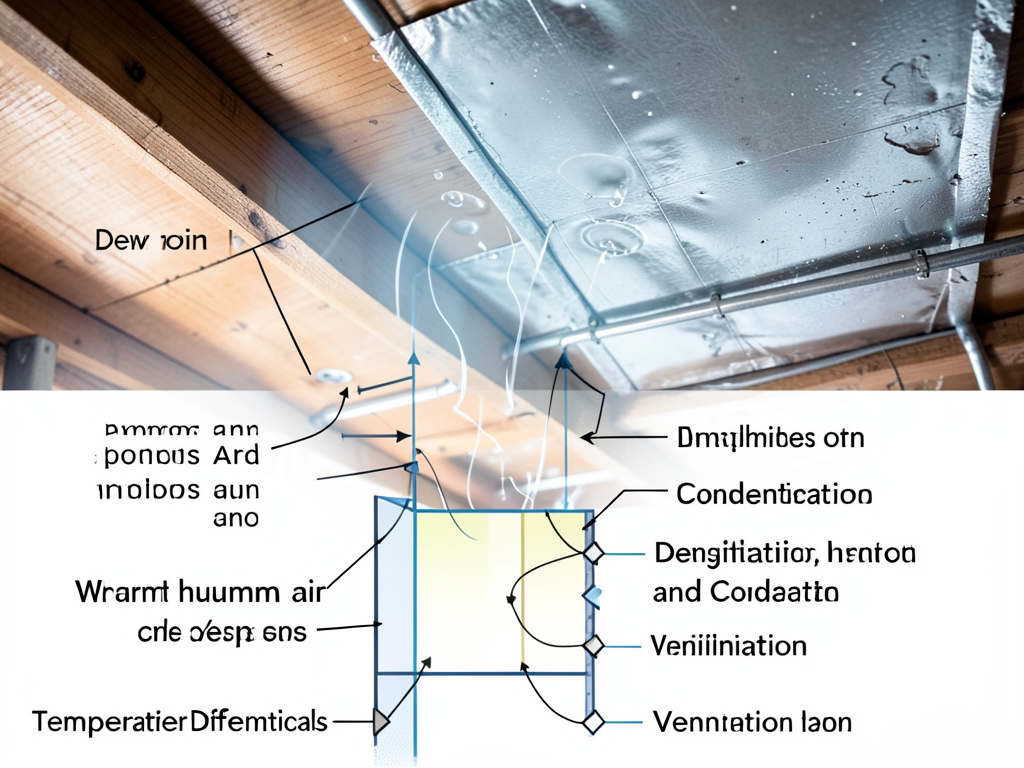
Diagram showing how warm humid air rises through ceiling bypasses and condenses on cold attic surfaces during temperature differentials.
Top Signs of Attic Moisture Problems
Recognizing attic moisture issues early can prevent extensive damage. Here are the key warning signs to watch for:
- Damp or matted insulation – Insulation that feels heavy or clumps together indicates moisture absorption. Wet insulation loses its R-value and becomes a breeding ground for mold.
- Dark water stains on wood – Brown or black discoloration on rafters, roof decking, or truss plates often indicates chronic moisture exposure and potential mold growth.
- Frost on roof nails – In winter, you might see frost crystals on nail heads protruding through the roof deck. This is a classic sign of condensation forming when warm attic air hits cold metal.
- Musty odors – A damp, earthy smell in your attic indicates active mold growth or decaying organic materials.
- Attic rain – During extreme temperature swings, you might actually see water droplets forming and falling from attic surfaces, similar to indoor rain.
- Peeling paint on interior ceilings – Moisture from the attic can travel through ceiling materials, causing paint to bubble and peel below.
Using a moisture meter on attic surfaces can help detect problems before they become visible. Readings above 20% moisture content on wood surfaces indicate active moisture problems requiring immediate attention. Immediate Steps for a Burst Pipe Repair in the Hilltop Neighborhood.
The Hidden Dangers: Mold and Structural Rot
Attic moisture isn’t just an inconvenience—it creates serious health and structural risks. According to the EPA, mold can begin growing within 24-48 hours of moisture exposure, and once established, it can spread rapidly through your attic space. EPA mold information.
Mold in your attic poses several dangers. First, it can compromise your indoor air quality as spores travel through your HVAC system or small gaps in your ceiling. This is particularly concerning for Virginia Beach residents with allergies or respiratory conditions. Second, certain mold species, like Stachybotrys (black mold), produce mycotoxins that can cause neurological symptoms and other health issues.
Beyond health concerns, chronic moisture causes structural damage. Wood rot weakens roof trusses, rafters, and decking, potentially creating safety hazards. In our coastal environment, the combination of moisture and salt air accelerates corrosion of metal fasteners and electrical components in your attic.
The cost of ignoring attic moisture can be substantial. Professional mold remediation in Virginia typically ranges from $15 to $30 per square foot, meaning a 1,000-square-foot attic could cost $15,000 to $30,000 to remediate. Structural repairs add thousands more. Prevention through proper ventilation and moisture control costs a fraction of these remediation expenses. Expert Mold Remediation for Vacation Rentals in Sandbridge.
Common Causes in Local Homes
Understanding the specific causes of attic moisture in Virginia Beach homes helps target solutions effectively. Here are the most common culprits we encounter:
Bathroom exhaust fans venting into the attic – This is surprisingly common in older Virginia Beach homes. Instead of routing moist air from showers and baths directly outside, many bathroom fans terminate in the attic space, pumping warm, humid air directly where you don’t want it. This single issue causes more attic moisture problems than any other factor.
Blocked soffit vents – Soffit vents allow fresh air to enter your attic at the eaves. When insulation blocks these vents or they become clogged with debris, proper airflow stops. Without intake air, your attic becomes a stagnant moisture trap. Many Virginia Beach homes have soffit vents that are completely blocked by insulation pushed too far into the eaves.
Inadequate R-value insulation – Virginia falls in Zone 4 for insulation requirements according to the International Energy Conservation Code. Many older homes have insulation values well below current recommendations. Insufficient insulation allows too much heat transfer, creating temperature differentials that promote condensation.
Air bypasses and thermal bridging – Small gaps around light fixtures, plumbing vents, and attic access points allow warm, moist air to rise into your attic. Thermal bridging through uninsulated attic joists creates cold spots where condensation forms.
HVAC duct sweat – In our humid climate, uninsulated or poorly insulated HVAC ducts in the attic can sweat profusely when cold air moves through them. This condensation can drip onto insulation and building materials below, creating the appearance of a roof leak.
Improper vapor barrier installation – Virginia’s climate requires specific vapor barrier placement. When installed incorrectly or missing entirely, moisture moves freely between your living space and attic.
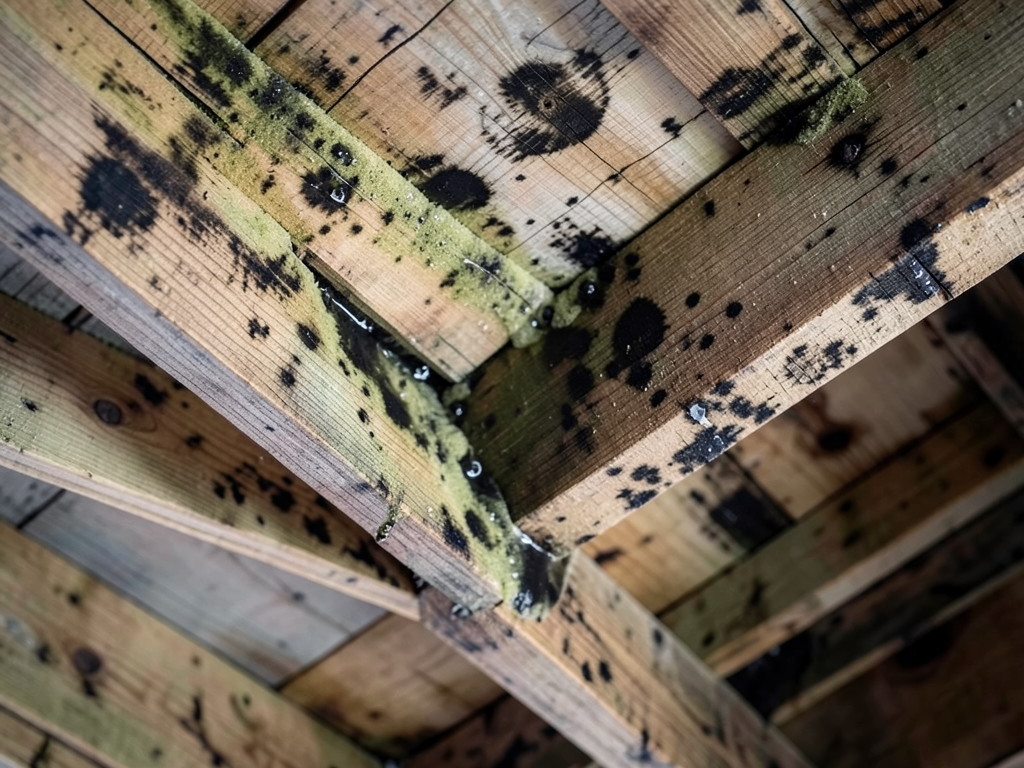
Photo showing mold growth on attic rafters with water stains, demonstrating how attic moisture problems create dark discoloration patterns.
Professional Solutions & Mitigation
When you discover attic moisture problems, professional assessment and remediation is often necessary. Here’s how water damage restoration experts in Virginia Beach approach attic moisture issues:
Comprehensive moisture mapping – Using thermal imaging cameras and moisture meters, technicians create a detailed map of moisture intrusion points. This diagnostic process identifies hidden moisture pockets that aren’t visible to the naked eye.
Containment and air quality control – Before remediation begins, the affected area is sealed off using plastic sheeting and negative air pressure systems. This prevents mold spores from spreading to other parts of your home during the cleanup process.
Mold remediation according to IICRC S520 standards – The Institute of Inspection Cleaning and Restoration Certification (IICRC) establishes industry standards for mold remediation. Professional remediation includes HEPA vacuuming, antimicrobial treatments, and proper disposal of contaminated materials.
Structural drying – Industrial-grade dehumidifiers and air movers are deployed to reduce moisture content in wood and other materials to safe levels. This process typically takes 3-5 days depending on the extent of moisture intrusion.
Ventilation correction – After drying, technicians address the root causes by installing or repairing soffit vents, ridge vents, or gable vents to ensure proper attic airflow. The goal is achieving 1 square foot of net free ventilation area per 150 square feet of attic space.
Insulation replacement – Wet insulation must be removed and replaced. Many homeowners upgrade to spray foam insulation during this process, which provides superior moisture resistance and R-value compared to traditional fiberglass batts.
Vapor barrier installation – Proper vapor barriers are installed on the warm side of your attic assembly to prevent moisture migration. In Virginia’s climate, this typically means placing the barrier on the attic floor between the living space and attic.
The entire process from assessment to completion usually takes 5-10 days, depending on the severity of the problem and weather conditions. Professional restoration companies work directly with insurance providers to document damage and facilitate claims when coverage applies.
Prevention Checklist for VA Beach Residents
Preventing attic moisture problems is far more cost-effective than remediation. Here’s a comprehensive prevention checklist for Virginia Beach homeowners:
- Inspect bathroom exhaust fans annually
Verify that all bathroom fans vent directly outside through the roof or side wall, not into the attic. Use a fog machine or smoke pencil to trace airflow paths and confirm proper termination.
- Check soffit vent clearance
Inspect your attic’s eave areas to ensure insulation doesn’t block soffit vents. Install proper baffles (vent chutes) to maintain a clear airflow channel from the soffit to the attic space above the insulation.
- Test attic ventilation effectiveness
On a windy day, use a smoke pencil near ridge vents to verify air movement. You should feel consistent airflow exiting the ridge when air enters through the soffits. No airflow indicates blocked or inadequate ventilation.
- Monitor attic humidity levels
Install a hygrometer in your attic to track relative humidity. Levels consistently above 60% indicate ventilation problems requiring attention. Ideal attic humidity stays between 40-50%.
- Seal air bypasses
Use spray foam or caulk to seal gaps around light fixtures, plumbing vents, and attic access points. These small openings collectively allow significant moisture transfer from your living space to the attic.
- Evaluate insulation R-value
Measure your existing insulation depth and compare to Virginia’s Zone 4 recommendations: R-49 to R-60 for attics. Add insulation if below these levels, ensuring proper installation without compression.
- Inspect HVAC ducts
Check for condensation on AC ducts during summer months. Insulate any ducts showing moisture with proper R-8 insulation or higher to prevent duct sweat.
- Maintain roof integrity
While this article focuses on non-leak moisture, ensure your roof remains in good condition. Replace damaged shingles and flashing promptly to prevent actual water intrusion.
Performing these checks annually, preferably in late spring before summer humidity peaks, can catch problems early. Many Virginia Beach homeowners combine these inspections with their annual HVAC maintenance for efficiency.
For homes in flood-prone areas or with known moisture issues, consider installing a remote moisture monitoring system that alerts you to developing problems via smartphone notifications.
Understanding Virginia’s Building Code Requirements
Virginia’s Uniform Statewide Building Code (USBC) establishes specific requirements for attic ventilation and moisture control. According to USBC Section 13.18, residential attic ventilation must provide net free ventilation area equal to 1/150 of the vented space. This requirement can be reduced to 1/300 if a vapor retarder is installed on the warm-in-winter side of the ceiling assembly.
The code also mandates specific requirements for bathroom exhaust systems. Per USBC Section 1203.2, bathroom exhaust fans must terminate outdoors, not in attics or other enclosed spaces. Ducts must be insulated when passing through unconditioned spaces to prevent condensation within the duct itself.
For new construction or major renovations in Virginia Beach, the code requires Class I or II vapor retarders on the warm side of the ceiling assembly. This typically means installing kraft-faced insulation or polyethylene sheeting beneath attic insulation in most homes.
Understanding these requirements helps homeowners verify that any ventilation or moisture control work meets current building standards. When hiring contractors for attic work, always confirm they understand and comply with USBC requirements for your specific situation.
Photo showing proper soffit vent installation with baffles installed to prevent insulation from blocking airflow, demonstrating best practices for attic ventilation.
When to Call a Professional
While some attic moisture issues can be addressed with DIY solutions, certain situations require professional intervention. Call a water damage restoration specialist if you notice:
- Active mold growth covering more than 10 square feet
- Structural damage to roof trusses or decking
- Persistent moisture problems despite DIY ventilation improvements
- Water stains spreading across ceilings below the attic
- Musty odors throughout your home that intensify when HVAC runs
Professional assessment is also wise before major attic renovations or insulation upgrades. A thorough inspection can identify hidden problems that might compromise your investment or create new issues.
Water damage restoration companies in Virginia Beach typically offer free initial inspections and can provide detailed remediation plans with cost estimates. Many work directly with insurance companies and can help document damage for claims when coverage applies.
Frequently Asked Questions
How can I tell if my attic moisture is from condensation or a roof leak?
Condensation typically appears as uniform moisture across surfaces, while roof leaks create localized wet spots that worsen during rain. Condensation also often shows frost patterns in winter and disappears during dry weather. A moisture meter can help distinguish between the two patterns.
Will running a dehumidifier in my attic solve moisture problems?
A dehumidifier can help manage attic moisture but doesn’t address underlying ventilation issues. In Virginia Beach’s humid climate, a dehumidifier might run constantly without solving the root cause. Proper ventilation that prevents moisture accumulation is more effective long-term.
How much does professional attic moisture remediation cost in Virginia Beach?
Costs vary widely based on severity. Basic ventilation improvements might cost $1,000-$3,000, while comprehensive mold remediation and structural repairs can range from $5,000-$20,000. Most companies provide free assessments and can give accurate estimates after inspection.
Can attic moisture cause problems in my living space?
Yes. Moisture from your attic can travel through small gaps into your living space, contributing to high indoor humidity, musty odors, and even mold growth on interior surfaces. It can also reduce HVAC efficiency as your system works harder to manage excess moisture.
How long does attic mold remediation take?
Most residential attic mold remediation projects take 3-7 days. This includes containment setup, removal of contaminated materials, cleaning and treatment of remaining surfaces, and final clearance testing. Larger or more complex projects may require additional time.
Attic moisture problems in Virginia Beach homes are common but manageable with proper understanding and intervention. By recognizing the signs early, addressing root causes rather than symptoms, and maintaining proper ventilation, you can protect your home from the damaging effects of attic condensation.
Don’t wait until you have extensive mold growth or structural damage. If you suspect attic moisture problems, call (757) 909-5033 today to schedule your inspection. Our certified technicians will assess your situation and provide a comprehensive plan to eliminate moisture and prevent future problems. Pick up the phone and call (757) 909-5033 before the next storm hits—your home’s health depends on it.
{
“@context”: “https://schema.org”,
“@type”: “BlogPosting”,
“headline”: “Why Your Attic Might Be Wet Even If Your Roof Isn’t Leaking”,
“description”: “Discover why attic moisture happens in Virginia Beach homes even with a perfect roof. Learn the hidden causes, health risks, and professional solutions from local experts.”,
“wordCount”: 2489,
“datePublished”: “2026-05-31T12:26:00.000Z”,
“dateModified”: “2026-05-31T12:26:00.000Z”,
“inLanguage”: “en-US”,
“mainEntityOfPage”: {
“@type”: “WebPage”,
“@id”: “https://apexwaterdamagerestorationvirginiabeach.com”
},
“publisher”: {
“@type”: “LocalBusiness”,
“name”: “Apex Water Damage Restoration Virginia Beach”,
“url”: “https://apexwaterdamagerestorationvirginiabeach.com”
},
“author”: {
“@type”: “Organization”,
“name”: “Apex Water Damage Restoration Virginia Beach”,
“url”: “https://apexwaterdamagerestorationvirginiabeach.com”
},
“image”: {
“@type”: “ImageObject”,
“url”: “https://apexwaterdamagerestorationvirginiabeach.com/wp-content/uploads/2026/03/why-your-attic-might-be-wet-even-if-your-roof-isn-1.png”
}
}
{
“@context”: “https://schema.org”,
“@type”: “LocalBusiness”,
“name”: “Apex Water Damage Restoration Virginia Beach”,
“url”: “https://apexwaterdamagerestorationvirginiabeach.com”,
“address”: {
“@type”: “PostalAddress”,
“addressLocality”: “Virginia Beach”
},
“areaServed”: {
“@type”: “City”,
“name”: “Virginia Beach”
}
}
{
“@context”: “https://schema.org”,
“@type”: “FAQPage”,
“mainEntity”: [
{
“@type”: “Question”,
“name”: “How can I tell if my attic moisture is from condensation or a roof leak?”,
“acceptedAnswer”: {
“@type”: “Answer”,
“text”: “Condensation typically appears as uniform moisture across surfaces, while roof leaks create localized wet spots that worsen during rain. Condensation also often shows frost patterns in winter and disappears during dry weather. A moisture meter can help distinguish between the two patterns.”
}
},
{
“@type”: “Question”,
“name”: “Will running a dehumidifier in my attic solve moisture problems?”,
“acceptedAnswer”: {
“@type”: “Answer”,
“text”: “A dehumidifier can help manage attic moisture but doesn’t address underlying ventilation issues. In Virginia Beach’s humid climate, a dehumidifier might run constantly without solving the root cause. Proper ventilation that prevents moisture accumulation is more effective long-term.”
}
},
{
“@type”: “Question”,
“name”: “Can attic moisture cause problems in my living space?”,
“acceptedAnswer”: {
“@type”: “Answer”,
“text”: “Yes. Moisture from your attic can travel through small gaps into your living space, contributing to high indoor humidity, musty odors, and even mold growth on interior surfaces. It can also reduce HVAC efficiency as your system works harder to manage excess moisture.”
}
},
{
“@type”: “Question”,
“name”: “How long does attic mold remediation take?”,
“acceptedAnswer”: {
“@type”: “Answer”,
“text”: “Most residential attic mold remediation projects take 3-7 days. This includes containment setup, removal of contaminated materials, cleaning and treatment of remaining surfaces, and final clearance testing. Larger or more complex projects may require additional time.”
}
}
]
}
{
“@context”: “https://schema.org”,
“@type”: “HowTo”,
“name”: “How to Prevent Attic Moisture”,
“step”: [
{
“@type”: “HowToStep”,
“position”: 1,
“name”: “Inspect bathroom exhaust fans annually”,
“text”: “Verify that all bathroom fans vent directly outside through the roof or side wall, not into the attic. Use a fog machine or smoke pencil to trace airflow paths and confirm proper termination.”
},
{
“@type”: “HowToStep”,
“position”: 2,
“name”: “Check soffit vent clearance”,
“text”: “Inspect your attic’s eave areas to ensure insulation doesn’t block soffit vents. Install proper baffles (vent chutes) to maintain a clear airflow channel from the soffit to the attic space above the insulation.”
},
{
“@type”: “HowToStep”,
“position”: 3,
“name”: “Test attic ventilation effectiveness”,
“text”: “On a windy day, use a smoke pencil near ridge vents to verify air movement. You should feel consistent airflow exiting the ridge when air enters through the soffits. No airflow indicates blocked or inadequate ventilation.”
},
{
“@type”: “HowToStep”,
“position”: 4,
“name”: “Monitor attic humidity levels”,
“text”: “Install a hygrometer in your attic to track relative humidity. Levels consistently above 60% indicate ventilation problems requiring attention. Ideal attic humidity stays between 40-50%.”
},
{
“@type”: “HowToStep”,
“position”: 5,
“name”: “Seal air bypasses”,
“text”: “Use spray foam or caulk to seal gaps around light fixtures, plumbing vents, and attic access points. These small openings collectively allow significant moisture transfer from your living space to the attic.”
},
{
“@type”: “HowToStep”,
“position”: 6,
“name”: “Evaluate insulation R-value”,
“text”: “Measure your existing insulation depth and compare to Virginia’s Zone 4 recommendations: R-49 to R-60 for attics. Add insulation if below these levels, ensuring proper installation without compression.”
},
{
“@type”: “HowToStep”,
“position”: 7,
“name”: “Inspect HVAC ducts”,
“text”: “Check for condensation on AC ducts during summer months. Insulate any ducts showing moisture with proper R-8 insulation or higher to prevent duct sweat.”
},
{
“@type”: “HowToStep”,
“position”: 8,
“name”: “Maintain roof integrity”,
“text”: “While this article focuses on non-leak moisture, ensure your roof remains in good condition. Replace damaged shingles and flashing promptly to prevent actual water intrusion.”
}
],
“image”: “https://apexwaterdamagerestorationvirginiabeach.com/wp-content/uploads/2026/03/why-your-attic-might-be-wet-even-if-your-roof-isn-1.png”
}
{
“@context”: “https://schema.org”,
“@type”: “BreadcrumbList”,
“itemListElement”: [
{
“@type”: “ListItem”,
“position”: 1,
“name”: “Home”,
“item”: “https://apexwaterdamagerestorationvirginiabeach.com”
},
{
“@type”: “ListItem”,
“position”: 2,
“name”: “Blog”,
“item”: “https://apexwaterdamagerestorationvirginiabeach.com/blog”
},
{
“@type”: “ListItem”,
“position”: 3,
“name”: “Why Your Attic Might Be Wet Even If Your Roof Isn’t Leaking”
}
]
}
{
“@context”: “https://schema.org”,
“@type”: “Service”,
“serviceType”: “Water Damage Restoration”,
“provider”: {
“@type”: “LocalBusiness”,
“name”: “Apex Water Damage Restoration Virginia Beach”,
“url”: “https://apexwaterdamagerestorationvirginiabeach.com”
},
“areaServed”: {
“@type”: “City”,
“name”: “Virginia Beach”
},
“description”: “Discover why attic moisture happens in Virginia Beach homes even with a perfect roof. Learn the hidden causes, health risks, and professional solutions from local experts.”
}