How we determine if your drywall can be saved after a leak in Princess Anne
Finding water seeping through your drywall in Princess Anne triggers instant worry about mold, structural damage, and costly repairs. The good news is that many drywall sections can be saved if caught quickly and evaluated properly. We use specific diagnostic tools and moisture thresholds to make that call. EPA mold information.
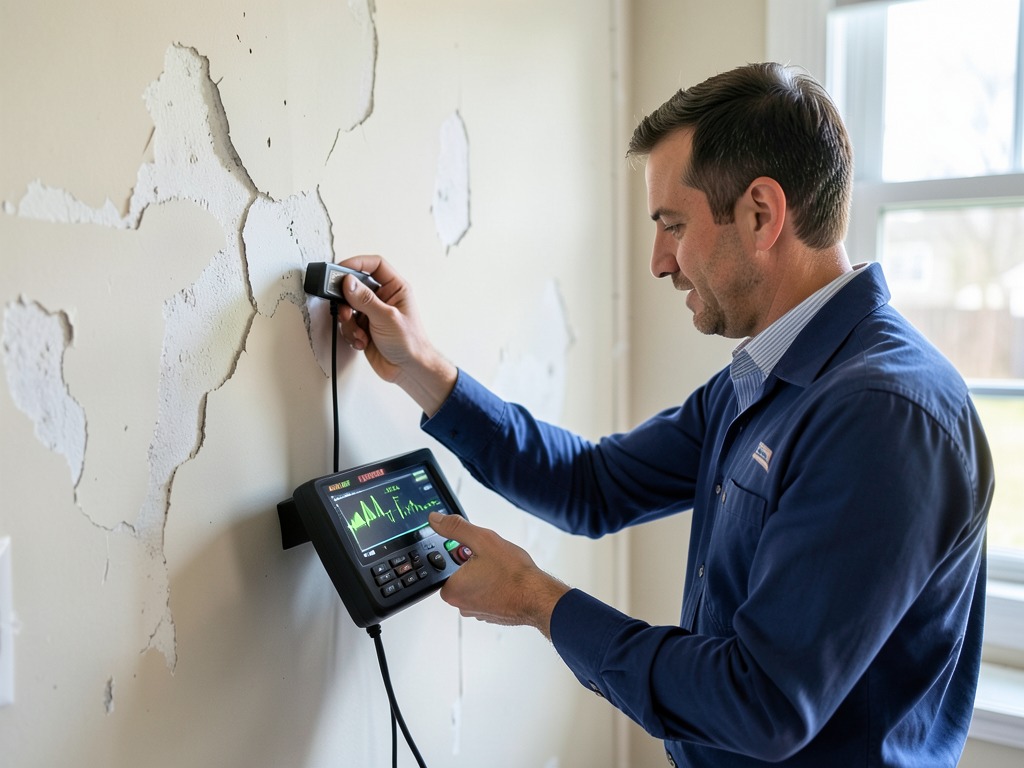
The first 24-48 hours matter most. After a leak, moisture begins wicking up the wallboard through capillary action, often traveling 2-3 feet higher than the visible water line. Our technicians map this hidden moisture using penetrating and non-penetrating moisture meters to see the true extent. Drywall with Category 1 clean water exposure that reads below 12% moisture content on our calibrated meters and shows no warping or bubbling typically qualifies for drying and restoration. Repairing Water Damage at Your Virginia Beach Oceanfront Property After a Storm.
But Princess Anne’s coastal climate adds complexity. Our average relative humidity sits around 75%, which slows natural evaporation and creates ideal conditions for mold spores to germinate within 48 hours. That’s why we bring industrial-grade LGR dehumidifiers that pull 20-30 gallons of water from the air daily, combined with high-velocity air movers that create airflow across every wet surface. We monitor progress with thermo-hygrometers, tracking humidity drops from the initial 75-80% down to the target 35-45% range. Who to Call for Emergency Water Removal in Virginia Beach Right Now.
The type of insulation behind your drywall also changes the equation. Fiberglass insulation often dries successfully if the drywall is salvageable, but cellulose insulation acts like a sponge and usually requires removal to prevent trapped moisture. We also check for vapor barriers that might be trapping water against the back of the gypsum board.. Read more about Dealing with wet attic insulation after a roof leak in Christopher Farms.
Category 2 gray water from washing machines or clean water that sat for more than 48 hours moves into questionable territory. The IICRC S500 standard we follow recommends antimicrobial treatment of salvageable materials in these cases. Category 3 black water from sewage or flooding requires immediate replacement regardless of moisture readings due to contamination risks outlined in Virginia’s mold remediation protocols. Expert Mold Remediation for Vacation Rentals in Sandbridge.
We document everything with moisture mapping, photo evidence, and meter readings that satisfy insurance adjusters. This data-driven approach means you get a clear answer: restore or replace, with the reasoning explained in plain terms.
If you’re seeing water stains, soft spots, or bubbling paint on your Princess Anne walls, don’t wait. Call (757) 909-5033 today to schedule your inspection before mold takes hold.
The 24-48 Hour Rule: Your Critical Window
Water damage follows a predictable timeline that we track on every job. Within the first 24 hours, clean water begins wicking up drywall through capillary action. By hour 24-48, mold spores that naturally exist in Princess Anne’s humid air start germinating on wet surfaces. This biological timeline drives our emergency response protocol.
Our moisture meters show that drywall exposed to clean water for under 24 hours typically reads between 15-18% moisture content. Readings above 20% indicate prolonged exposure where structural integrity becomes questionable. We use these numbers, not visual inspection alone, to make restoration decisions.
The clock starts ticking the moment water contacts your wall. Every hour of delay increases the likelihood of requiring full replacement rather than restoration. Our emergency crews carry all necessary equipment to begin mitigation within 60 minutes of your call.
Princess Anne’s proximity to the Chesapeake Bay means our average humidity stays 10-15% higher than inland Virginia areas. This environmental factor means water takes longer to evaporate naturally, making professional drying equipment essential rather than optional. What Virginia Beach Town Center Condo Owners Should Do After a Leak.
Call (757) 909-5033 immediately when you discover water damage. The first 24 hours determine whether your drywall can be saved. Immediate Steps for a Burst Pipe Repair in the Hilltop Neighborhood.
Evaluating the Type of Water: Categories 1, 2, and 3
Water contamination level dictates whether drywall can be saved, regardless of moisture content. The IICRC S500 standard classifies water into three categories based on source and health risks.. Read more about Finding the source of a mystery leak in your Woods Corner house.
Category 1 water comes from clean sources like broken supply lines, rainwater, or appliance malfunctions. This water contains no significant contamination and poses minimal health risks. Drywall exposed to Category 1 water for under 48 hours with moisture readings below 16% typically can be saved through proper drying techniques.
Category 2 water, also called gray water, contains significant contamination from sources like washing machine overflows, toilet bowls with urine, or dishwasher leaks. This water may cause discomfort or illness if contacted. Category 2 exposure requires antimicrobial treatment of salvageable materials and more aggressive drying protocols.. Read more about Choosing the right materials for your Virginia Beach home remodel after a flood.
Category 3 water, or black water, contains pathogenic agents and is grossly unsanitary. Sources include sewage backups, flooding from rivers or streams, and water from beyond the toilet trap. Virginia’s mold remediation protocols require immediate removal and disposal of all affected drywall when Category 3 water is involved.
The contamination level cannot be determined by appearance alone. We use ATP testing and other diagnostic tools to verify water category when the source is uncertain. This scientific approach ensures we follow proper safety protocols for your family’s protection.
Understanding water category helps you make informed decisions about restoration versus replacement. When in doubt, we always err on the side of safety and recommend removal of questionable materials.
Signs Your Drywall Can Be Saved vs. When to Tear Out
Several physical indicators help us determine if drywall can be restored. We use a systematic evaluation process that combines visual inspection with moisture meter readings.. Read more about Can your kitchen cabinets be restored after a sink leak in Lago Mar?.
Signs that your drywall can likely be saved:
- Moisture content below 16% on penetrating moisture meter
- No visible warping, sagging, or structural deformation
- Paint or wallpaper shows no bubbling, peeling, or discoloration
- Wall feels solid when pressed, no sponginess
- Exposure time under 48 hours for clean water
- No musty odors indicating active mold growth
Signs that indicate drywall must be replaced:
- Moisture content above 20% even after initial drying
- Visible sagging, warping, or structural failure
- Bubbling, peeling, or extensive discoloration of finishes
- Musty odors present (indicates active mold growth)
- Exposure to contaminated water (Category 2 or 3)
- Water sat for more than 72 hours
We also consider the wall’s construction. Drywall over metal studs typically dries more successfully than over wood studs, which can wick moisture up from the floor. The presence of insulation affects drying time significantly.
Our evaluation includes checking adjacent areas that may have hidden moisture. Water travels along the path of least resistance, often affecting areas you cannot see. We use thermal imaging cameras to detect temperature differences that indicate moisture behind walls.
The decision to restore or replace impacts both cost and timeline. Restoration typically costs 40-60% less than replacement and can be completed in 3-5 days versus 1-2 weeks for full replacement.
The Professional Drying Process in Princess Anne
Professional structural drying goes far beyond setting up fans. Our process follows the IICRC S500 standard and uses specialized equipment calibrated for Princess Anne’s coastal environment.
Step 1: Water Extraction
We begin by removing standing water using truck-mounted extraction units that remove 10-15 gallons per minute. This step alone can remove 90% of the moisture burden.
Step 2: Moisture Mapping
Using penetrating and non-penetrating moisture meters, we create a detailed map showing exactly where water has traveled. This often reveals moisture 2-3 feet higher than the visible water line.
Step 3: Strategic Equipment Placement
We position commercial-grade LGR dehumidifiers and centrifugal air movers based on the moisture map. LGR units work in Princess Anne’s high humidity by removing water vapor more efficiently than standard dehumidifiers.
Step 4: Daily Monitoring
Our technicians return daily to track moisture content readings, adjust equipment placement, and ensure drying progresses according to the standard 3-5 day timeline. We document all readings for insurance purposes.
Step 5: Final Verification
Once moisture content drops below 12% and humidity stabilizes at 35-45%, we conduct final testing. This includes surface sampling to verify no active mold growth began during the drying process.
The entire process requires specialized knowledge of psychrometrics – the science of moisture in air. Our technicians understand how Princess Anne’s 75% average humidity affects drying times and equipment efficiency.
Professional drying protects your home’s structural integrity while preventing secondary damage like mold growth. The investment typically pays for itself by avoiding the higher costs of full replacement.
DIY vs. Professional Restoration: The Hidden Risks
Many homeowners attempt to dry water-damaged drywall themselves using household fans and dehumidifiers. While this approach seems cost-effective initially, it often leads to bigger problems and higher costs long-term.
Surface drying is deceptive. When you dry the visible surface, moisture often remains trapped behind the drywall where you cannot see or feel it. This hidden moisture creates perfect conditions for mold growth within 48-72 hours.
Standard household fans move about 1,500-2,000 cubic feet per minute. Our commercial air movers move 3,000-4,000 CFM and create the high-velocity airflow needed to evaporate moisture from deep within wall cavities.
Consumer dehumidifiers remove about 30-70 pints of water per day. Our LGR dehumidifiers remove 150-200 pints daily and work effectively in Princess Anne’s high humidity, where standard units struggle to maintain low humidity levels.
Moisture meters are essential diagnostic tools that homeowners lack. Without them, you cannot verify when drying is complete or identify hidden moisture pockets that will cause problems later.
The cost difference is significant but justified. Professional drying for a typical water-damaged room costs $1,200-2,500. Full replacement, including demolition, new materials, and repainting, costs $4,000-8,000 for the same area.
More importantly, DIY attempts that fail often result in mold growth that requires professional remediation. Mold remediation costs average $15-30 per square foot, quickly exceeding any initial savings from avoiding professional drying.
Insurance companies often require professional documentation of the drying process. DIY attempts may result in claim denials for secondary damage that could have been prevented with proper mitigation.
Call (757) 909-5033 for a professional assessment. The cost of proper drying is always less than the cost of replacing damaged materials and remediating mold growth.
Frequently Asked Questions
How long does it take to dry water-damaged drywall?
Professional drying typically takes 3-5 days for drywall exposed to clean water. The exact timeline depends on the extent of moisture, wall construction, and Princess Anne’s humidity levels. We monitor progress daily and only declare drying complete when moisture content drops below 12%.
Can I just cut out the damaged section of drywall?
Cutting out only the visibly damaged section often misses hidden moisture that has traveled up the wall. Water typically wicks 2-3 feet higher than the visible damage. We use moisture meters to map the true extent before recommending any cutting strategy.
Will my insurance cover drywall restoration?
Most homeowners insurance policies cover sudden and accidental water damage, including professional drying services. Coverage depends on your specific policy and the water source. We work directly with insurance companies and provide the documentation they require for claims processing.
How can I tell if mold is growing behind my drywall?
Musty odors are often the first sign of hidden mold growth. Other indicators include unexplained allergy symptoms, visible discoloration or staining on walls, and persistent moisture readings above 16% on moisture meters. Professional testing can confirm mold presence behind walls.
What happens if I wait too long to address water damage?
Waiting beyond 48-72 hours significantly increases the likelihood that drywall will need replacement. Mold begins growing within this timeframe, and prolonged moisture exposure causes structural weakening. The cost of restoration also increases as the damage worsens with time.
Do I need to replace insulation if my drywall gets wet?
It depends on the insulation type and water category. Fiberglass insulation often can be dried successfully if the drywall is salvageable. Cellulose insulation typically requires removal as it acts like a sponge and holds moisture against the drywall backing. For more information, visit FEMA disaster assistance.
{
“@context”: “https://schema.org”,
“@type”: “BlogPosting”,
“headline”: “How we determine if your drywall can be saved after a leak in Princess Anne”,
“description”: “Learn how water damage experts in Princess Anne evaluate drywall after leaks. Discover moisture testing, mold risks, and when to restore vs replace your walls.”,
“wordCount”: 1995,
“datePublished”: “2026-03-13T14:16:00.000Z”,
“dateModified”: “2026-03-13T14:16:00.000Z”,
“inLanguage”: “en-US”,
“mainEntityOfPage”: {
“@type”: “WebPage”,
“@id”: “https://apexwaterdamagerestorationvirginiabeach.com”
},
“publisher”: {
“@type”: “LocalBusiness”,
“name”: “Apex Water Damage Restoration Virginia Beach”,
“url”: “https://apexwaterdamagerestorationvirginiabeach.com”
},
“author”: {
“@type”: “Organization”,
“name”: “Apex Water Damage Restoration Virginia Beach”,
“url”: “https://apexwaterdamagerestorationvirginiabeach.com”
},
“image”: {
“@type”: “ImageObject”,
“url”: “https://apexwaterdamagerestorationvirginiabeach.com/wp-content/uploads/2026/03/how-we-determine-if-your-drywall-can-be-saved-afte-1.png”
}
}
{
“@context”: “https://schema.org”,
“@type”: “LocalBusiness”,
“name”: “Apex Water Damage Restoration Virginia Beach”,
“url”: “https://apexwaterdamagerestorationvirginiabeach.com”,
“address”: {
“@type”: “PostalAddress”,
“addressLocality”: “Virginia Beach”
},
“areaServed”: {
“@type”: “City”,
“name”: “Virginia Beach”
}
}
{
“@context”: “https://schema.org”,
“@type”: “FAQPage”,
“mainEntity”: [
{
“@type”: “Question”,
“name”: “How long does it take to dry water-damaged drywall?”,
“acceptedAnswer”: {
“@type”: “Answer”,
“text”: “Professional drying typically takes 3-5 days for drywall exposed to clean water. The exact timeline depends on the extent of moisture, wall construction, and Princess Anne’s humidity levels. We monitor progress daily and only declare drying complete when moisture content drops below 12%.”
}
},
{
“@type”: “Question”,
“name”: “Can I just cut out the damaged section of drywall?”,
“acceptedAnswer”: {
“@type”: “Answer”,
“text”: “Cutting out only the visibly damaged section often misses hidden moisture that has traveled up the wall. Water typically wicks 2-3 feet higher than the visible damage. We use moisture meters to map the true extent before recommending any cutting strategy.”
}
},
{
“@type”: “Question”,
“name”: “Will my insurance cover drywall restoration?”,
“acceptedAnswer”: {
“@type”: “Answer”,
“text”: “Most homeowners insurance policies cover sudden and accidental water damage, including professional drying services. Coverage depends on your specific policy and the water source. We work directly with insurance companies and provide the documentation they require for claims processing.”
}
},
{
“@type”: “Question”,
“name”: “How can I tell if mold is growing behind my drywall?”,
“acceptedAnswer”: {
“@type”: “Answer”,
“text”: “Musty odors are often the first sign of hidden mold growth. Other indicators include unexplained allergy symptoms, visible discoloration or staining on walls, and persistent moisture readings above 16% on moisture meters. Professional testing can confirm mold presence behind walls.”
}
},
{
“@type”: “Question”,
“name”: “What happens if I wait too long to address water damage?”,
“acceptedAnswer”: {
“@type”: “Answer”,
“text”: “Waiting beyond 48-72 hours significantly increases the likelihood that drywall will need replacement. Mold begins growing within this timeframe, and prolonged moisture exposure causes structural weakening. The cost of restoration also increases as the damage worsens with time.”
}
},
{
“@type”: “Question”,
“name”: “Do I need to replace insulation if my drywall gets wet?”,
“acceptedAnswer”: {
“@type”: “Answer”,
“text”: “It depends on the insulation type and water category. Fiberglass insulation often can be dried successfully if the drywall is salvageable. Cellulose insulation typically requires removal as it acts like a sponge and holds moisture against the drywall backing. For more information, visit FEMA disaster assistance.”
}
}
]
}
{
“@context”: “https://schema.org”,
“@type”: “BreadcrumbList”,
“itemListElement”: [
{
“@type”: “ListItem”,
“position”: 1,
“name”: “Home”,
“item”: “https://apexwaterdamagerestorationvirginiabeach.com”
},
{
“@type”: “ListItem”,
“position”: 2,
“name”: “Blog”,
“item”: “https://apexwaterdamagerestorationvirginiabeach.com/blog”
},
{
“@type”: “ListItem”,
“position”: 3,
“name”: “How we determine if your drywall can be saved after a leak in Princess Anne”
}
]
}
{
“@context”: “https://schema.org”,
“@type”: “Service”,
“serviceType”: “Water Damage Restoration”,
“provider”: {
“@type”: “LocalBusiness”,
“name”: “Apex Water Damage Restoration Virginia Beach”,
“url”: “https://apexwaterdamagerestorationvirginiabeach.com”
},
“areaServed”: {
“@type”: “City”,
“name”: “Virginia Beach”
},
“description”: “Learn how water damage experts in Princess Anne evaluate drywall after leaks. Discover moisture testing, mold risks, and when to restore vs replace your walls.”
}